
Last updated November 25, 2026
 Wrought iron
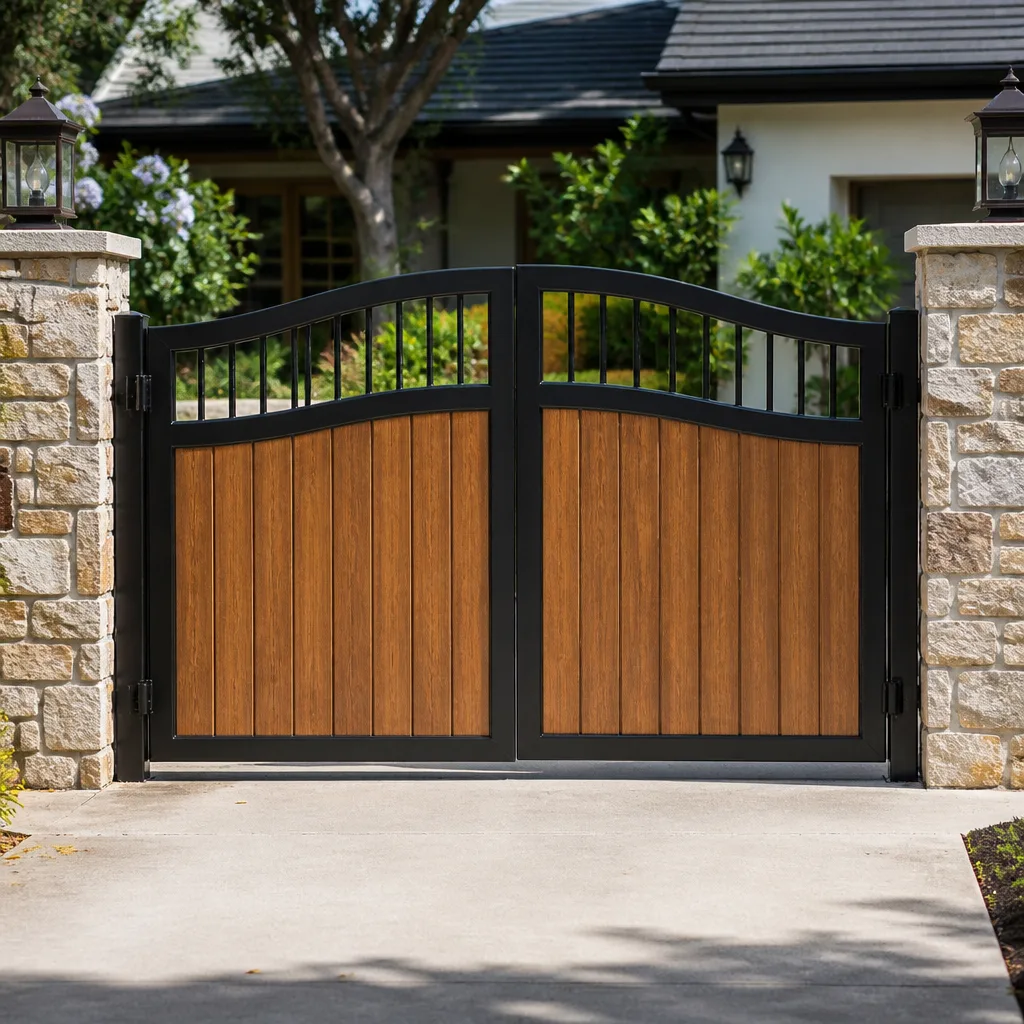 Wood & steel frame
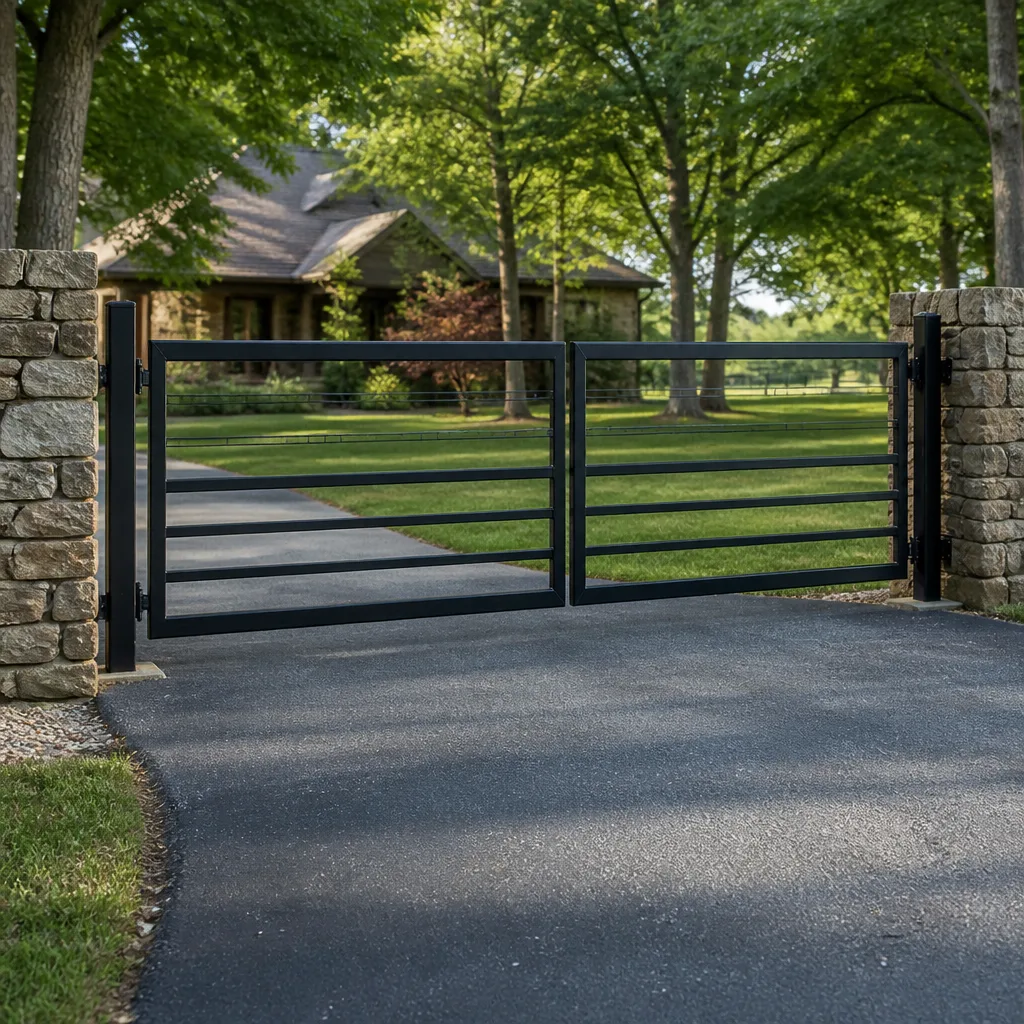 Farm & ranch
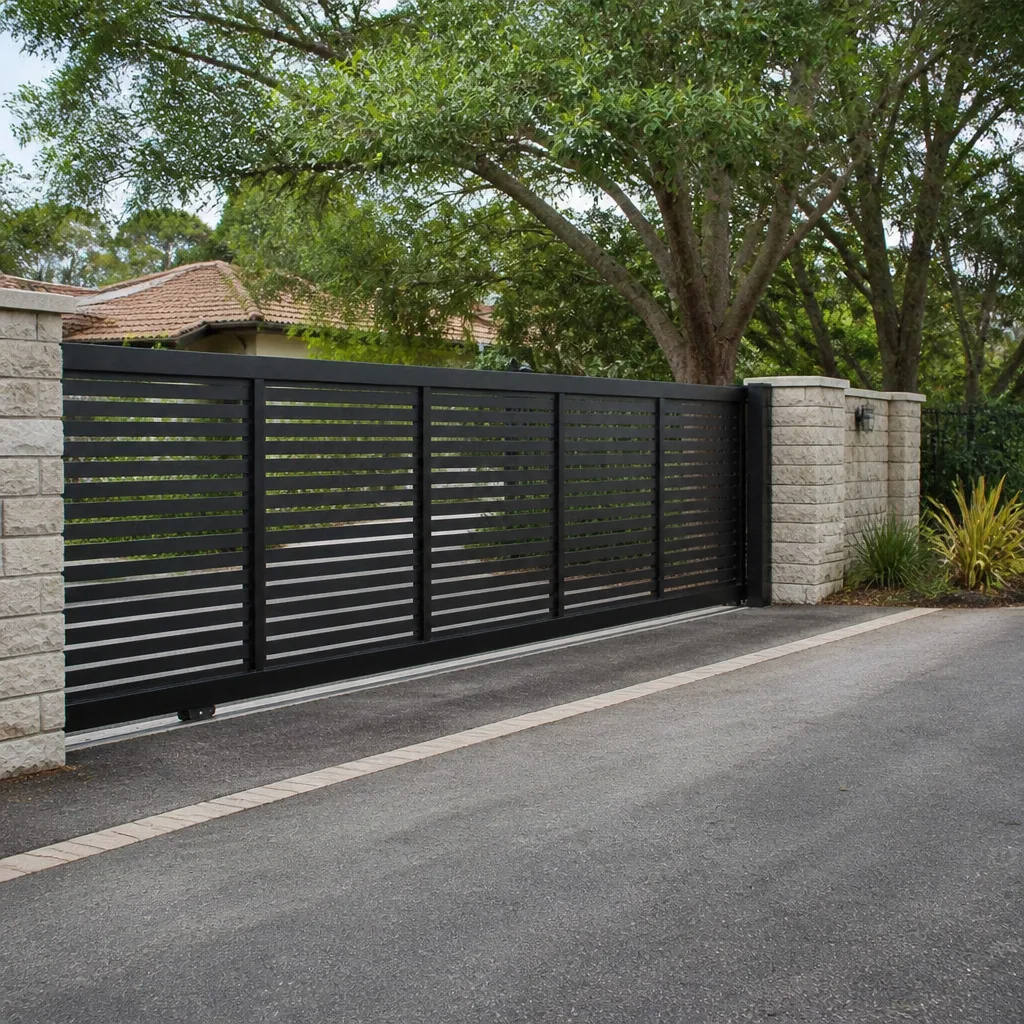 Sliding driveway gates
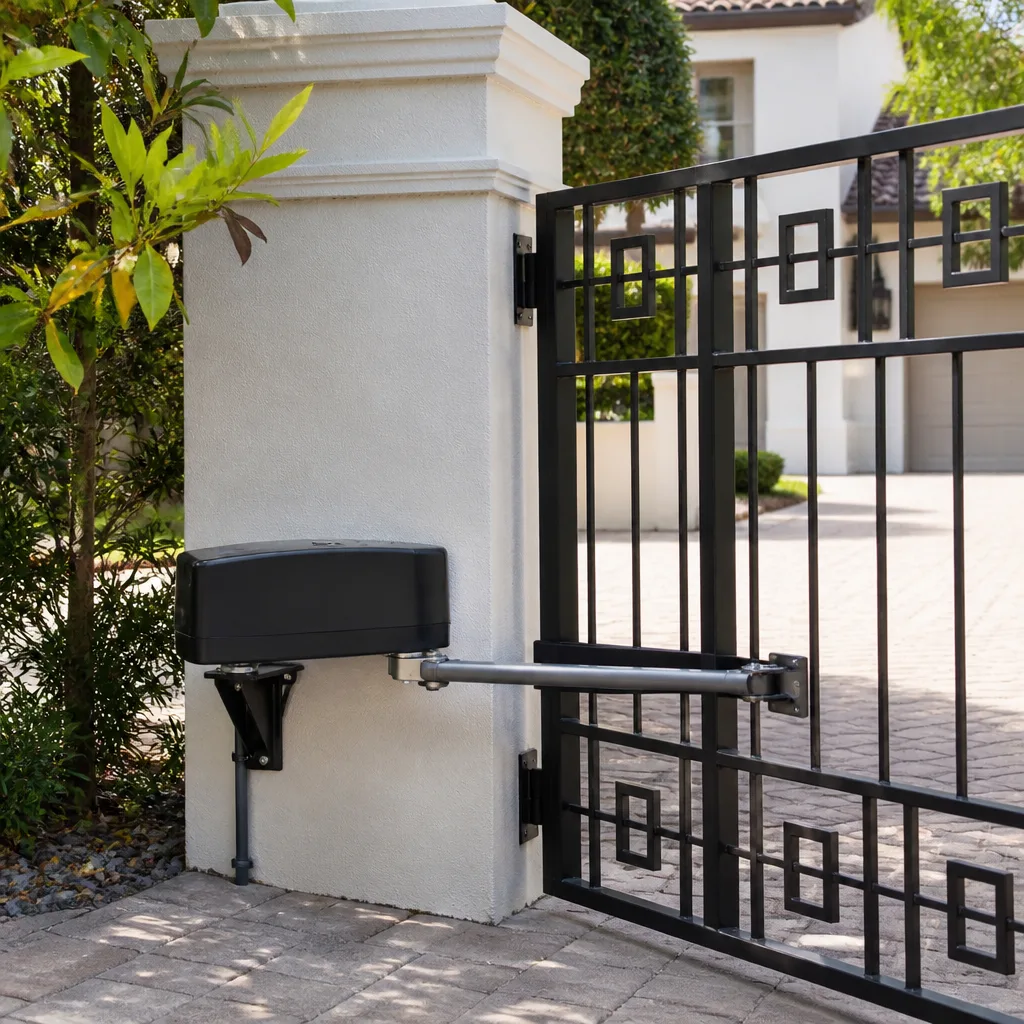 LiftMaster operators
Free on-site gate assessment - hinges, posts, and your LiftMaster or Nice gate operator checked before anything is quoted
The assessment is free and the quote is the invoice.
Get your free estimateSeasonal Gate Repair Care for Eastmoreland: Year-Round Homeowner’s Guide
Most Eastmoreland homeowners think about their gate when it stops working, which is almost always the worst time to think about it. The common misconception is that gate care is an annual chore, one spring tune-up and you’re done. That’s not how the Eastmoreland climate works. Our seasonal pattern runs wet and cold for months, then swaps to dry and hot without much transition in between, and those two halves of the year stress gate hardware in completely different ways. The tasks that protect your gate in October are not the tasks that matter in May. This guide maps care to the actual stressor at work in each season, so you know what a 20-minute self-inspection can catch and what needs a technician with alignment tools.
Quick Answer
Seasonal gate care in Eastmoreland comes down to two stress cycles. Fall and winter, the wet cycle, hinge on drainage around post footings, sealing bare wood before rain, and keeping water out of operator housings and battery backups. Spring and summer, the dry cycle, hinge on checking post alignment after the soil settles and handling thermal expansion on metal slide tracks. The single most important month for prep is October, when footings are about to face months of soil movement. Anything involving alignment, wiring, motor internals or battery systems is a technician visit; cleaning, visual checks, and clearing debris are homeowner jobs.
Styles & brands we work with
- Wrought iron
- Wood & steel frame
- Farm & ranch
- Sliding driveway gates
- LiftMaster operators
Table of Contents
- Why October Is the Most Important Month for Your Eastmoreland Gate
- Fall Gate Prep: Drainage, Footings and Sealing Before the Rain
- Winter Gate Care: Ice, Motor Stress and Battery Backup Behavior
- Spring: Checking Post Alignment After Months of Wet Soil
- Summer: Thermal Expansion and the Slide Gate That Suddenly Binds
- The 20-Minute Self-Inspection vs. the Technician Visit
- The Eastmoreland Gate Care Calendar
- How Your Operator Brand Changes the Care Routine
Why October Is the Most Important Month for Your Eastmoreland Gate
October in Eastmoreland is the most important month for gate preparation, and the reason is not cold. It’s soil. Over the wet months, the ground around your gate posts takes on months of rain and swells, shifts and settles. A post footing that sat perfectly stable through a dry summer is about to face the most movement pressure it will see all year. Whatever you do or don’t do to the drainage around that footing in October decides how much that movement affects your gate by February.
The other half of fall prep is wood. If your gate has bare wood grain, even small exposed areas at the bottom rail or along cut ends, water finds it. Wood that stays wet through the wet season does what wet wood does. Sealing before the rain starts is a straightforward job; sealing after months of saturation is a longer, messier one.
This is also the season when the hinge hardware, latches and operator mounts on an automated gate get their real workout. Everything that worked smoothly in the dry months begins to feel the combination of moisture and temperature swings.
In our experience working on Eastmoreland gates, the biggest fall mistake isn’t doing the wrong thing. It’s doing nothing, because the gate “still works.” A gate that cycles fine in October can be binding by January if the ground around a footing has shifted and nobody was watching for it.
What to look at before the wet season sets in:
- Water pooling anywhere within a few feet of a post footing after rain
- Bare or gray wood at the bottom rail, post base or along any cut end
- Gaps opening at joints that felt tight in summer
- Hinges that have started to sag or groan
- Any change in how the gate swings or how the operator cycles
Write down what you find. Comparison is the whole tool here. A gate is a mechanical system that tells you about changes over time, and the only way to notice a change is to have a record of how it was.
Fall Gate Prep: Drainage, Footings and Sealing Before the Rain
Fall prep in Eastmoreland comes down to moving water away from the gate and sealing the gate against water. Work through these in order, starting with drainage, because nothing else matters much if water is standing around a footing.
Step 1: Walk the drainage. After the first real rain, look at where water goes around your gate posts. Pooling within a few feet of a footing is the problem to solve. That might mean clearing a low spot, redirecting a downspout, or simply keeping leaf litter and soil from damning against the post base. If water consistently stands against a footing through the wet season, that’s a site drainage question worth raising with a technician, since the fix may involve the footing itself.
Step 2: Clear the track and swing path. On a slide gate, debris in the track holds water and accelerates wear. On a swing gate, leaf buildup under the leaf keeps the bottom edge wet. Clear both before the leaves really come down and check again after.
Step 3: Seal exposed wood grain. A coat of appropriate exterior finish on bare grain, particularly at the bottom rail, post bases and cut ends, protects the wood through the wet months. Recoat anything that’s worn thin. This is one of the highest-value, lowest-effort fall tasks on a wood gate.
Step 4: Look at the operator housing and wiring entry points. Water getting into the operator enclosure or into a low-voltage wiring connection is a common failure point through the wet season. Check that covers sit properly and that no wiring runs through a spot where water collects. If you see moisture inside an enclosure, don’t dig around in it. That’s a technician call. Low-voltage gate wiring and operator internals carry risk, and a trained professional should handle anything inside the control box.
Step 5: Check the hardware torque points. Hinge bolts, latch strike plates and operator mounting brackets all loosen through a season of cycling. A quick visual and a check that nothing wobbles catches most of it. Anything that’s loosened repeatedly is worth having a technician look at, because repeated loosening often means something underneath has moved.
If your gate needs more than this level of attention before the wet season, that’s the moment to book gate repair rather than wait for a failure.
Winter Gate Care: Ice, Motor Stress and Battery Backup Behavior
Winter is when an automated gate’s operator earns its keep and shows its weaknesses. Cold affects a motor in a few predictable ways: lubricants thicken, batteries deliver less, and any ice in the track or on the hardware adds resistance the operator has to overcome. The gate usually keeps working, but it works harder, and a system that was already marginal in fall is more likely to trip a fault or stall a cycle in the cold.
Battery backup is the part most homeowners don’t think about until a power outage coincides with a cold snap. An operator with a battery backup keeps the gate cycling when the power drops, but cold reduces a battery’s available output. The behavior you’ll notice is that a backup that ran the gate for many cycles in summer runs fewer in January before it needs the mains back. That’s normal behavior, not necessarily a failed battery, but it’s also the season to have the battery checked if it’s been in service a while.
Here’s where brand matters, and it’s a good example of why a gate specialist diagnoses by brand logic rather than by guesswork. A Viking unit and a Mighty Mule unit don’t handle cold-weather battery behavior or low-battery logic the same way. Their control boards report or respond to a weak battery differently, and the troubleshooting path is different. A technician who works across those platforms knows what a given unit’s symptom usually means. Someone reading the manual on-site doesn’t. If your gate is a Viking, the first check looks different than it does on a Mighty Mule.
Winter checks worth doing:
- Keep ice and snow out of slide gates and swing paths; never force a gate that’s frozen in place
- Listen to the motor. A groan or a slow cycle that wasn’t there in fall is a signal
- Watch for ice in the track and clear it gently, without hammering the track
- Test the gate on battery backup and note roughly how many cycles it completes
- Leave the operator enclosure closed. Don’t open a control box in freezing conditions to “check on it”
If the motor is straining or the battery backup is failing to complete cycles, that’s not a job for the homeowner. Book a technician and describe the symptom and the brand. The faster a technician knows the platform, the faster the diagnosis. Our gate motor & opener work covers exactly this: battery systems, control boards and motor internals across residential and commercial platforms.
Spring: Checking Post Alignment After Months of Wet Soil
Spring in Eastmoreland is when you find out what the wet season did to your footings. Soil that swelled and shifted around a footing through the winter can leave a post leaning slightly, and a gate that swings or slides with a little more effort than it did in fall. The critical question is whether the change is within acceptable tolerance or urgent. That’s usually not something a homeowner can judge by eye, because the eye is bad at small measurements and small measurements are exactly what matter on a gate.
What changes after a wet season:
- Post lean, visible or felt
- A gate that no longer sits square in its frame
- A leaf that has dropped or begun to scrape the ground
- A slide gate whose track has shifted or whose rollers no longer ride centered
- A latch that needs an extra push, or a strike plate that no longer lines up
- A swing gate that’s started self-opening or self-closing
Small changes in how a gate closes are the early warning. A swing gate that used to close flush and now needs a nudge is telling you something moved. Same for a slide gate whose leading edge has started to catch on one side of the opening. These are symptoms of alignment, and alignment is best measured with tools, not adjusted by guessing.
What a technician checks in spring:
- Post verticality and lean
- Hinge and roller alignment against the frame
- Track or rail straightness and level on a slide gate
- Operator mounting bracket position relative to the gate
- Limit switch and sensor positioning once alignment is confirmed
A post that’s leaning enough to change how the gate cycles needs to be addressed sooner rather than later, because a misaligned gate puts continuing strain on the operator and hinges every time it runs. Waiting through the dry months doesn’t fix alignment. It just lets the wear continue. If your gate is catching, dragging or closing awkwardly, get it looked at. That’s the season for it.
Summer: Thermal Expansion and the Slide Gate That Suddenly Binds
Here’s the seasonal failure that surprises Eastmoreland homeowners every year: a slide gate that ran perfectly in April starts binding in July. Nothing broke. Nothing was damaged. The gate just stopped sliding smoothly. Nine times out of ten, what changed is temperature.
Metal expands when it’s hot. A steel slide gate track that sat within tolerance through the cool spring grows slightly through the summer, and the gate leaf off the same material grows with it. Where the track is anchored in a way that limits expansion, the result is a track that binds along part of its run. On a long slide gate, the binding often shows up at one end. Rollers start riding harder, the operator works against more resistance, and the gate may stall or stop short of its limit. The gate isn’t broken and the operator isn’t failing. The geometry of the track has changed with the temperature.
Thermal expansion on a slide gate can show up as:
- A track that binds in the heat and frees up after the cool of night
- Rollers that ride higher or harder on one end of the run
- The operator stalling or reversing near the same spot on the track
- Scraping or grinding that’s worse on a hot afternoon
- A gate that’s slow to start from a stop in direct sun
This is one of the cases where a homeowner can guess and a technician can measure. A track that needs adjustment needs to be aligned and re-anchored properly, with the expansion accounted for. Trying to fix it by tightening the operator’s force setting masks the symptom and accelerates wear on the motor. If your gate binds in the heat, tell a technician it binds in the heat, not just that it binds. That observation alone points the diagnosis in the right direction.
Summer is also when batteries get tested by heat rather than cold. A backup battery that works fine through a mild summer shows weaknesses in a hot one. Test it once mid-season and note the cycle count. On any gate across our residential and commercial work, this is the kind of check worth having on the calendar.
The 20-Minute Self-Inspection vs. the Technician Visit
Much of seasonal gate care is homeowner work, and there’s no reason to call a technician for it. What matters is knowing which tasks are in your reach and which aren’t. Crossing that line is where gates get damaged and people get hurt.
What a 20-minute self-inspection covers:
- Walk the gate and look at the post bases. Look for pooling water, cracks in the concrete, or obvious lean.
- Open and close the gate manually and listen. Note any new groans, scraping or hesitation.
- Check hinges, brackets and latch hardware for obvious wobble.
- Look for bare wood grain and note where it needs sealing.
- Clear debris from the track, swing path and around the post bases.
- Test the operator’s cycle once, and note the battery backup performance if your unit has one.
- Write down what you found and when. Comparison is the whole point.
That list catches the vast majority of problems early, and it’s the single highest-value thing a homeowner can do for their gate.
What requires a technician:
- Any check or adjustment inside the operator housing or control box, which includes wiring and circuit boards
- Any evaluation of post alignment, track straightness or hinge geometry
- Battery testing and replacement on an automated operator
- Motor strain, fault codes, or a gate that stops mid-cycle
- Any access control work, including keypads and intercom panels
- A gate that’s dropped, off its track, or starting to scrape the ground
A gate is a heavy mechanical system, and a swing or slide leaf in motion carries real force. The dangerous parts on a gate are the operator’s wiring and power, heavy panels that can crush, and slide gates that come off the track. Don’t work around the wiring or open the control box yourself. A trained professional should handle anything electric. Knowing the boundary between the two lists is what keeps seasonal care safe and effective.
The Eastmoreland Gate Care Calendar
Here’s the seasonal care calendar distilled into the year, mapped to the actual stressor in Eastmoreland. Treat each entry as a prompt to look, not a rigid schedule. Eastmoreland gates all live in the same climate, but each one has its own hardware and history.
October: Footing and Water Prep
- Walk drainage after the first heavy rain
- Seal any bare wood grain, especially at the bottom rail and post bases
- Check operator housing covers and wiring entry points
- Torque-check hinge and bracket hardware
- Clear debris, particularly around footing drainage
December through February: Cold-Weather Checks
- Keep the track and swing path free of ice and snow
- Listen for groans or slow cycles from the motor
- Test battery backup and note roughly how many cycles it completes
- Leave the control box closed; call a technician if it looks wet inside
March through April: Post and Alignment Checks
- Look for post lean and changes in how the gate sits in its frame
- Note any new scraping or a gate that needs a nudge to close
- Book a technician for alignment measurement if anything has changed
- Recheck hardware for looseness after the wet season
June through August: Heat and Expansion Checks
- Note whether a slide gate binds when it’s hot and frees up when it’s cool
- Get the track alignment measured if binding doesn’t resolve on its own
- Test the backup battery mid-season
- Keep the slide track clear of debris and check for weeds at the track edges
If a season’s checks turn up a problem, the right move is usually to get it looked at before the next season begins. A gate is easier to repair when the problem is small.
How Your Operator Brand Changes the Care Routine
The seasonal tasks on a manual gate are mostly the same regardless of hardware, because there’s no operator. The moment there’s a motor and a control board in the picture, the brand matters. Different platforms handle cold, low voltage, battery behavior and fault reporting in different ways, and a technician who works across those platforms can tell from a symptom which part of the system to check first.
We work with LiftMaster, FAAC, BFT, Linear, Viking, Ghost Controls, DoorKing, Elite and Mighty Mule. What that means in practice is that a symptom like “the gate moved slowly this morning” leads down one diagnostic path on a Viking unit and a different one on a Linear unit, and a different one again on a DoorKing or a Ghost Controls. Knowing the brand saves diagnostic time and saves the homeowner guesswork.
A few examples of how care shifts by platform:
- Residential-grade platforms. Mighty Mule and Ghost Controls are common on single-family driveway gates. Cold-weather battery behavior follows predictable patterns, and the care routine focuses on keeping the battery healthy and the swing clear.
- Linear and Viking. Common across both residential and light commercial applications, and their battery backup and fault logic is worth having checked a couple of times a year, particularly across winter and summer.
- DoorKing. Usually the access-control and multi-unit end of the range. Keypad and intercom integration is a bigger part of the routine, and those systems get tested and kept clean through the year.
When you call about a problem, tell us the brand and the symptom. That single step shortens the diagnosis. It’s also why we work on your brand rather than reading the manual once we arrive: brand-familiar technicians get from symptom to fix faster, whether that’s a routine seasonal service or a same-day repair. Our gate installation work follows the same logic; the system we install is the system we know how to care for across all four seasons.
Common Mistakes to Avoid
- Treating gate care as a single annual task. The tasks that protect a gate in Eastmoreland’s wet season are not the tasks that protect it in summer. One calendar slot doesn’t cover both stress cycles.
- Forcing a frozen or binding gate. A gate that opens hard is telling you something needs attention. Forcing it damages the hardware and strains the operator. Fix the cause instead of the symptom.
- Cranking up the operator’s force setting to overcome resistance. Turning up the force masks a binding track or a misaligned hinge. It also wears out the motor faster. The right answer is alignment, not force.
- Sealing wood after months of rain instead of before. Sealing in October locks water out. Sealing in January locks moisture in. Sequence matters, and Eastmoreland’s wet season makes the difference.
- Opening the operator housing to look for a problem. Low-voltage wiring and control boards carry real risk. A visual check of the exterior is fine; anything inside is a technician’s job.
- Assuming a post is “still fine” because the gate opens. Small post shifts show up as a gate that steadily works harder, not one that fails suddenly. Measure rather than eyeball.
- Waiting until the gate stops working to schedule care. A gate that’s binding in July or scraping in February is a repair now and a bigger repair in six months. The value of seasonal care is catching the change early.
See the difference
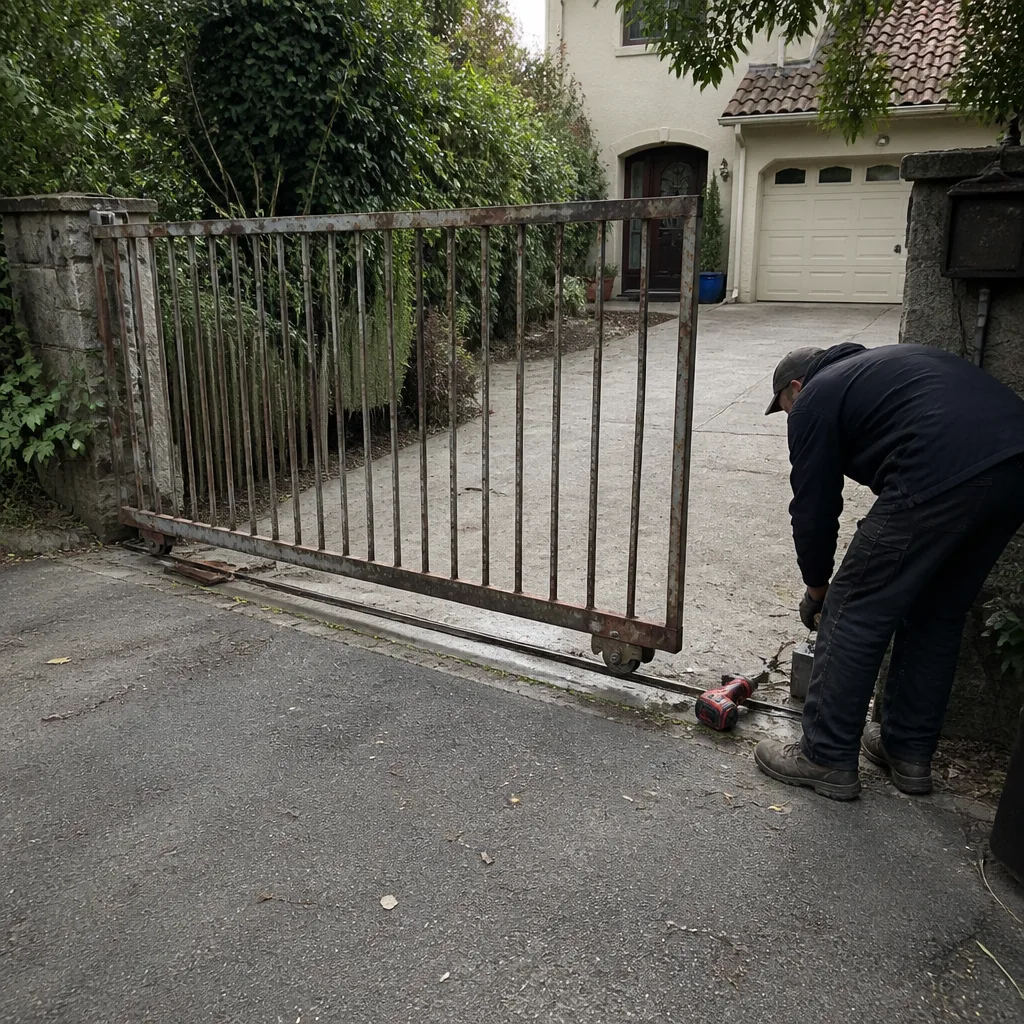 Before
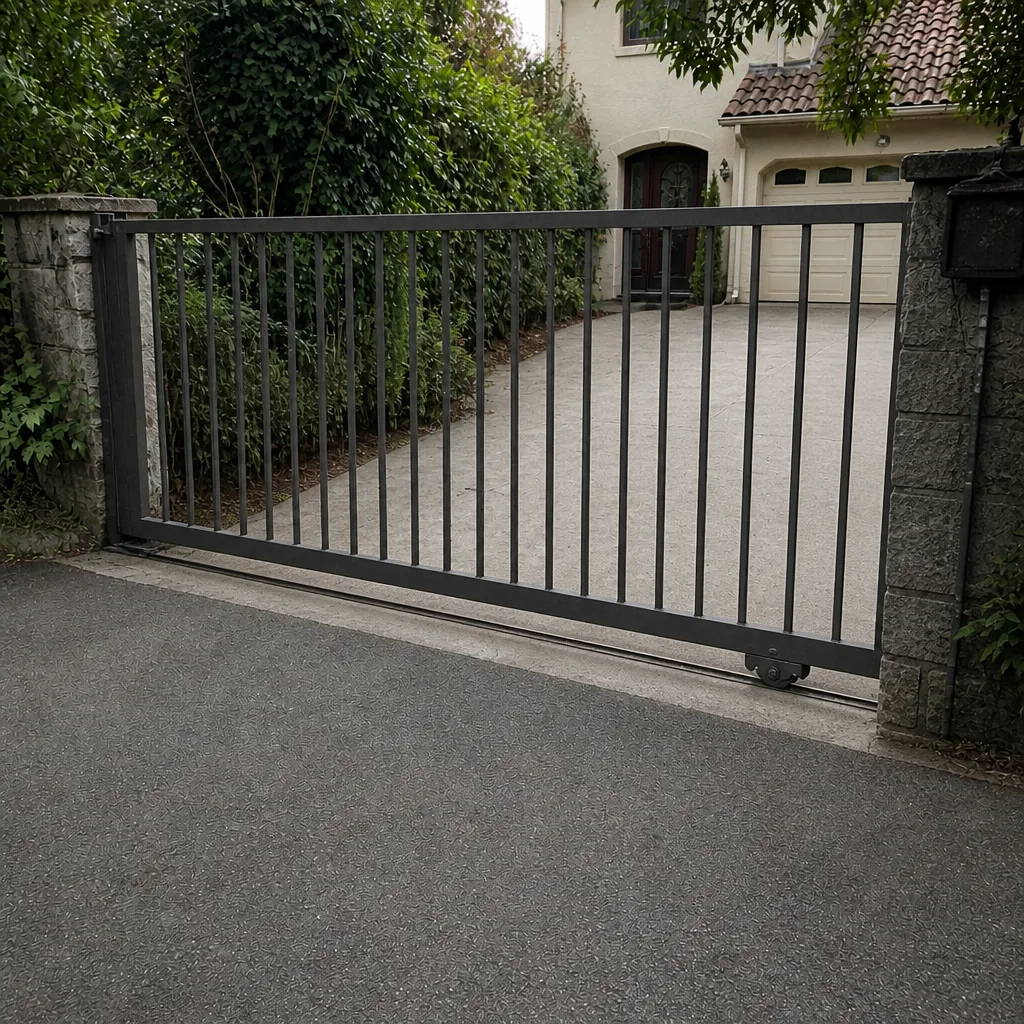 After
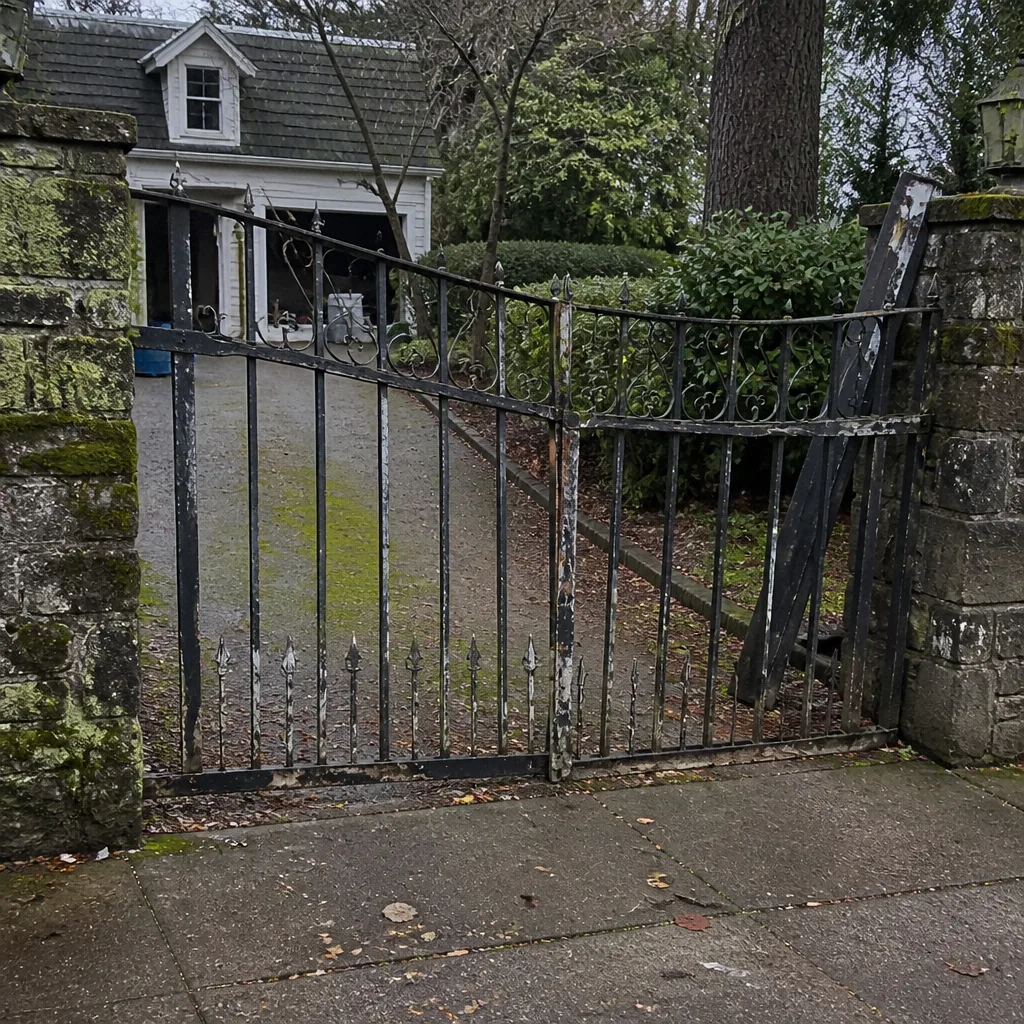 Before
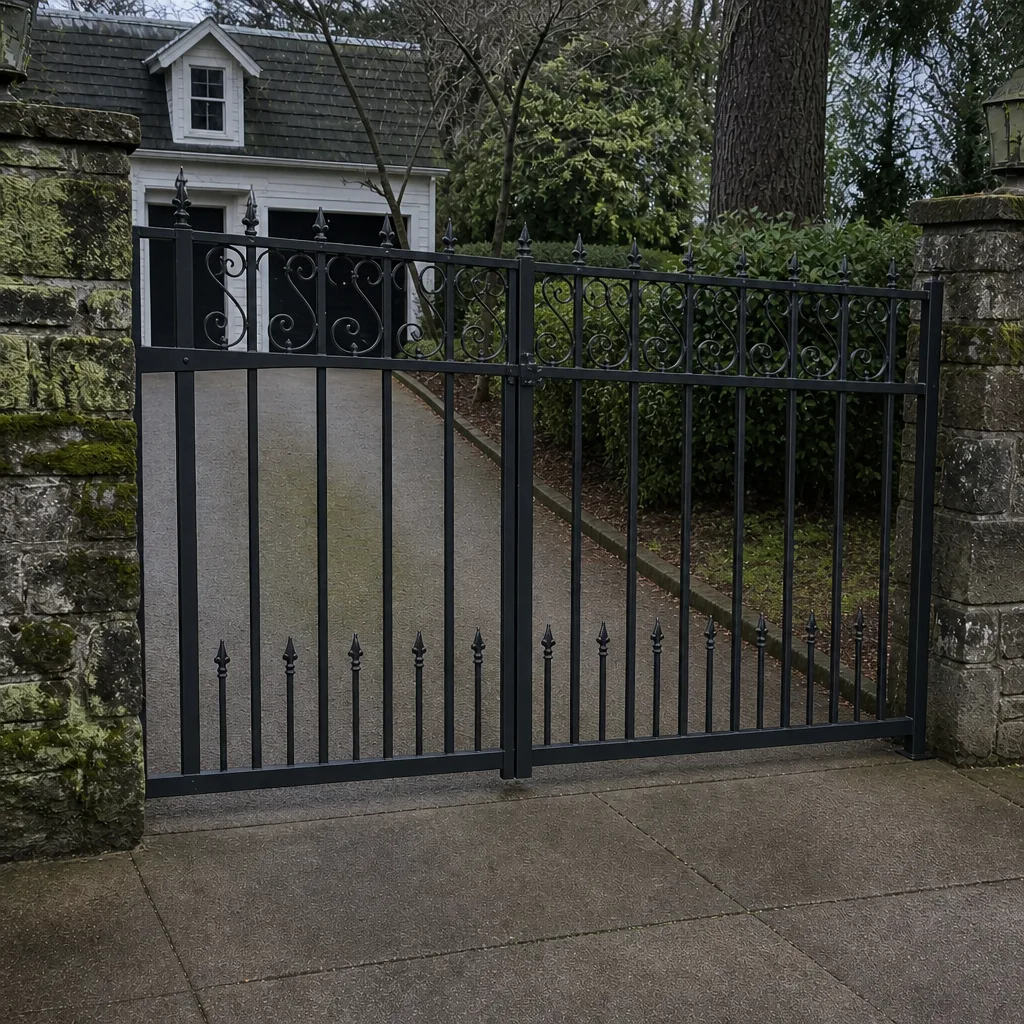 After
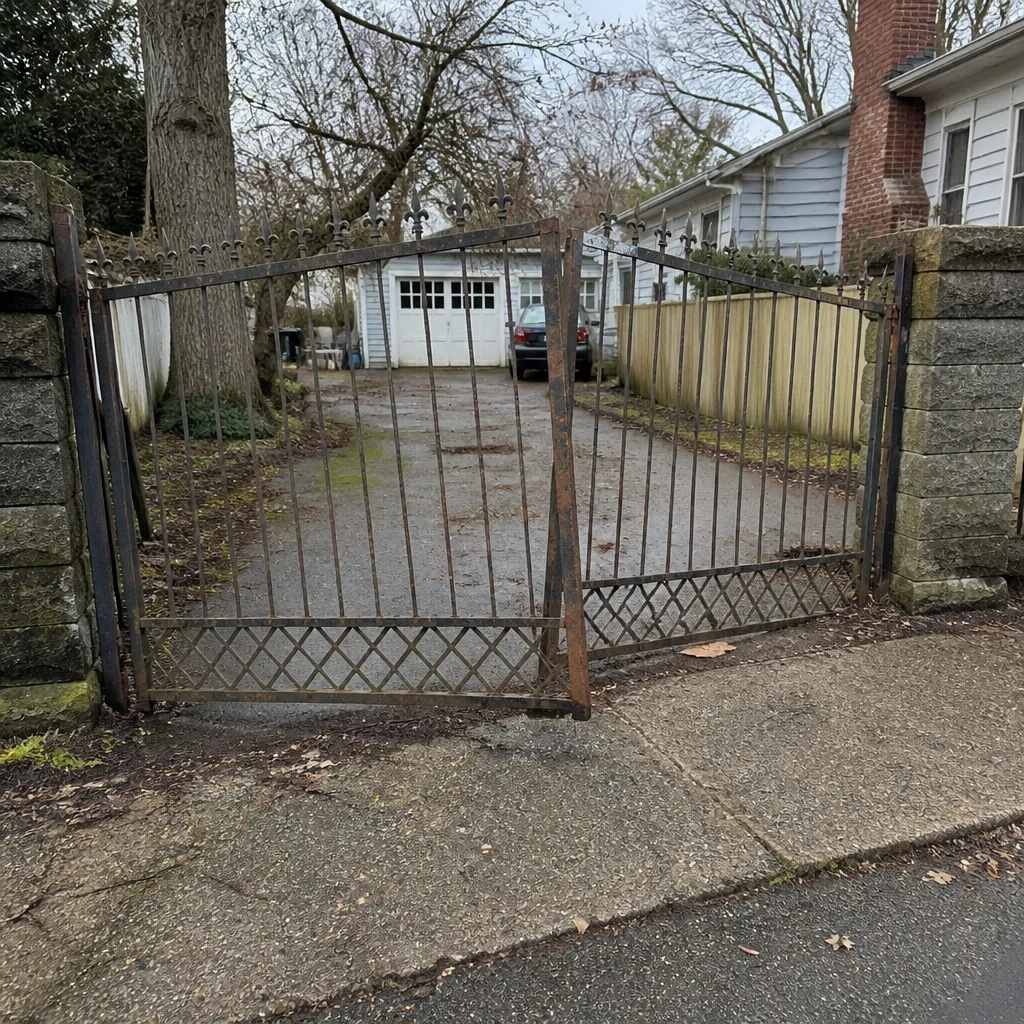 Before
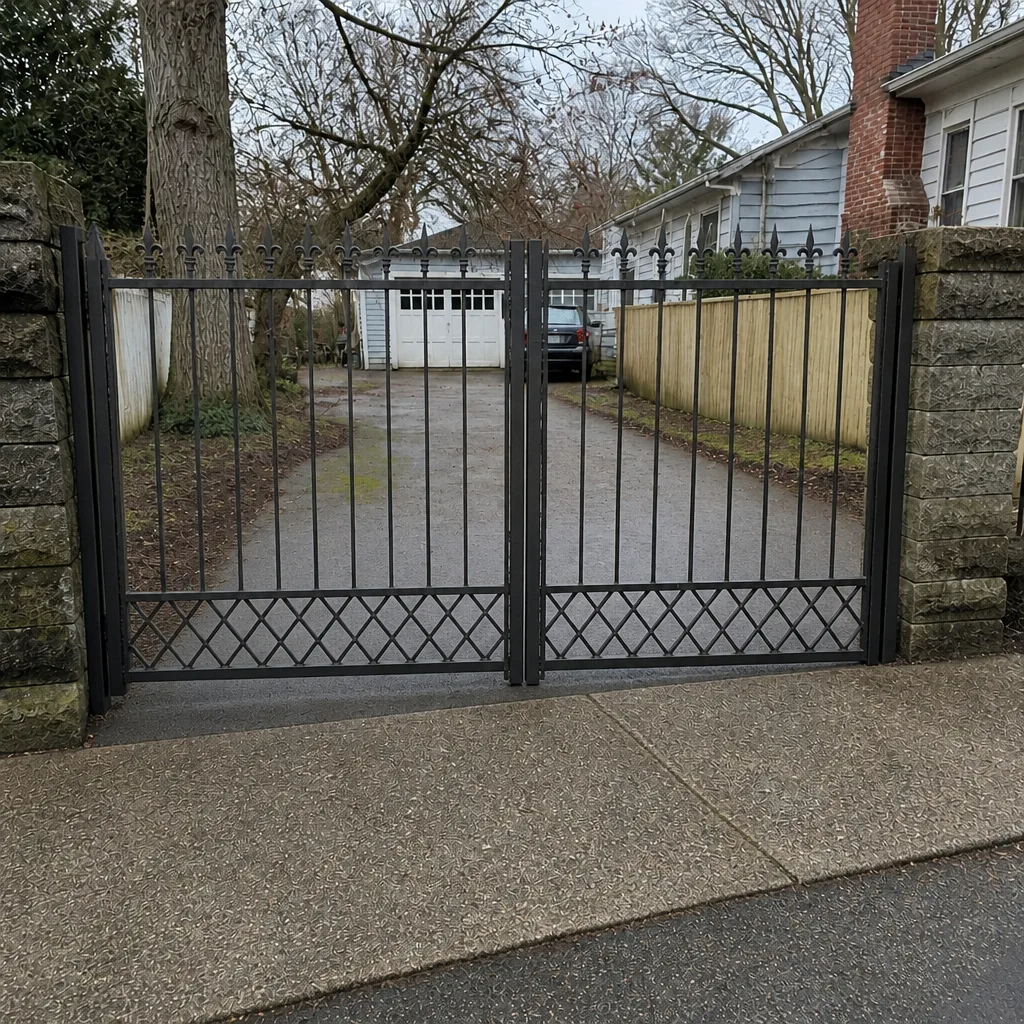 After
When to Call a Professional
Call a technician when the gate has changed and you’re not sure why. That includes post lean, a slide gate that binds in the heat, a track that’s shifted, a hinge that’s dropped, a latch that no longer lines up, a motor that groans, a battery backup that won’t complete cycles, and any problem inside the operator or control box. Call us if your gate is caught in a position where it won’t open or close and you need it working again. Electric and automated gate work, including low-voltage wiring, control boards and access control, requires a trained professional. If the gate is stuck open or closed, keep people clear of the moving parts until it’s been sorted. Gate Repair Eastmoreland offers free estimates in Eastmoreland. Call (888) 839-4209. We answer 24/7. Fast dispatch from 7am to 7pm, Sunday through Friday, and the price is quoted and agreed before any work starts.
Frequently Asked Questions
October is the most important month for gate prep in Eastmoreland. That’s when the soil is about to absorb months of rain and post footings face their heaviest movement pressure, and it’s the last window to seal bare wood and check drainage before the wet season starts. Doing the fall checks in October protects the gate through the whole wet cycle.
If the gate no longer sits square in its frame, if it needs a nudge to close, or if the leaf has started to scrape the ground, that’s a sign alignment has changed and it’s worth having it measured. Small changes in how a gate closes are the early warning. A technician measures post lean, hinge geometry and track straightness with tools; the eye is not good enough at small measurements to decide.
Because metal expands when it’s hot. A slide gate track and leaf grow slightly through the summer, and if the track’s anchors limit that expansion the gate binds along part of its run. A gate that runs smoothly in the morning and binds in the afternoon is showing you thermal expansion, not a broken operator. Have the track measured and re-aligned so the expansion is accounted for.
Yes. Cold reduces a battery’s available output, so a backup that ran the gate for many cycles in summer will run fewer in winter. That’s normal behavior, but it’s also the season to have the battery tested if it’s been in service a while. A Viking and a Mighty Mule unit respond to a weak battery differently, so the right check depends on your brand.
The self-inspection covers visual checks, clearing debris, noting changes, and testing the cycle once. A technician visit covers anything inside the operator, battery testing, post alignment, track straightness, hinge geometry, and access control. If a check requires opening the control box, adjusting a track, or measuring a post, it’s a technician job.
We work on your brand. We handle LiftMaster, FAAC, BFT, Linear, Viking, Ghost Controls, DoorKing, Elite and Mighty Mule. That matters for seasonal care because brand-familiar technicians diagnose by the platform’s logic rather than guesswork. Tell us the brand and the symptom when you call, and it shortens the diagnosis. For a free estimate, call (888) 839-4209. We answer 24/7. Fast dispatch from 7am to 7pm, Sunday through Friday.
The Bottom Line
Eastmoreland’s seasonal pattern creates two distinct stress cycles on gate hardware, and the maintenance tasks that protect a gate in October are not the tasks that matter in May. The single most important month is October, when drainage and post footings face their heaviest movement pressure before the wet season. Winter is a matter of cold and battery behavior, with brand-specific logic that matters. Spring is when post alignment gets tested by what the wet season did. Summer is when thermal expansion starts binding slide gates that ran fine in April. Know which tasks belong in a 20-minute self-inspection and which need a technician with alignment tools, and catch the small things before they grow.
If a season’s checks turn up something you’re not sure about, the fastest way to a straight answer is a call. Whether it’s a track that needs measuring, a motor that’s straining, or an access control system that needs service, Gate Repair Eastmoreland is a gate specialist, not a generalist. From the motor to the keypad, we cover repair, new installation, motor and opener work, and the access control that ties it all together, across residential and commercial gates. To book a free estimate, call (888) 839-4209. We answer 24/7. Fast dispatch from 7am to 7pm, Sunday through Friday. Our technicians have up to 15 years of experience.
Written by the team at Gate Repair Eastmoreland.