
Last updated November 25, 2026
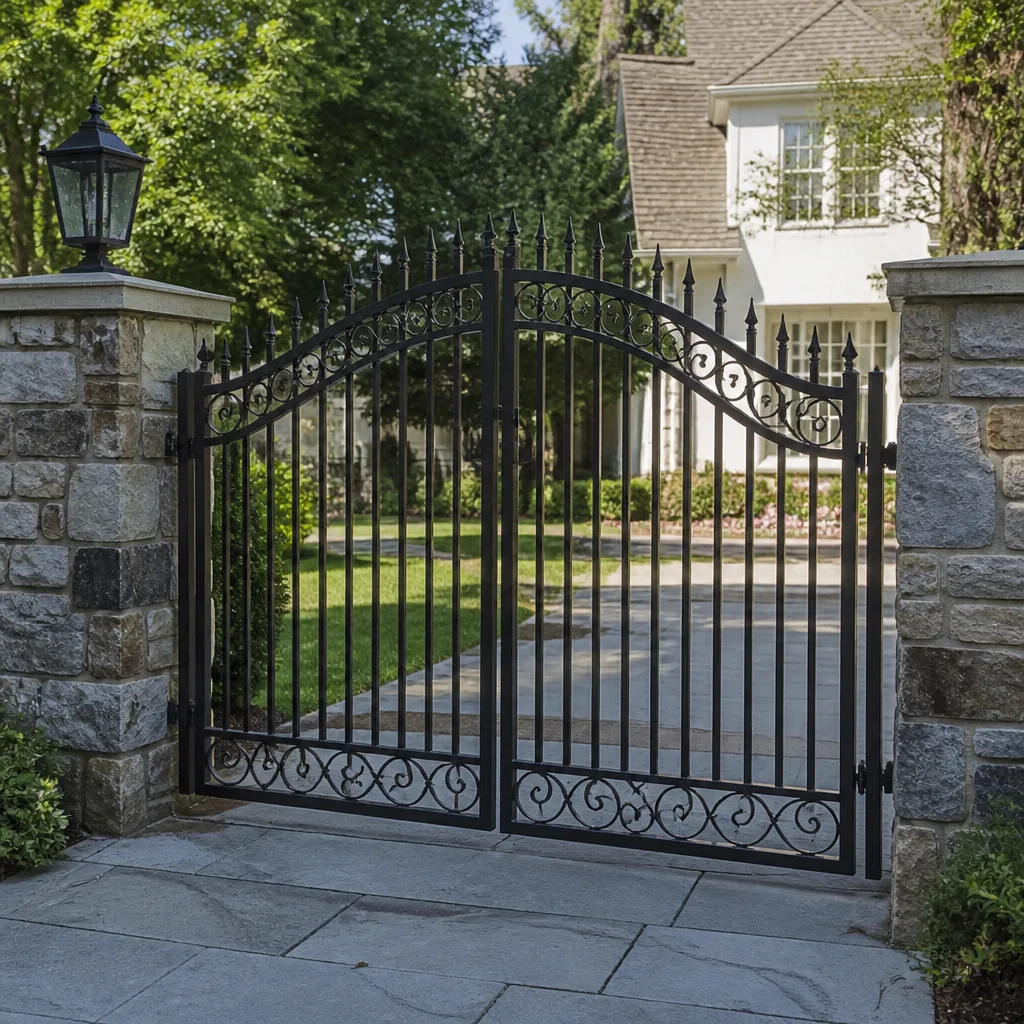 Wrought iron
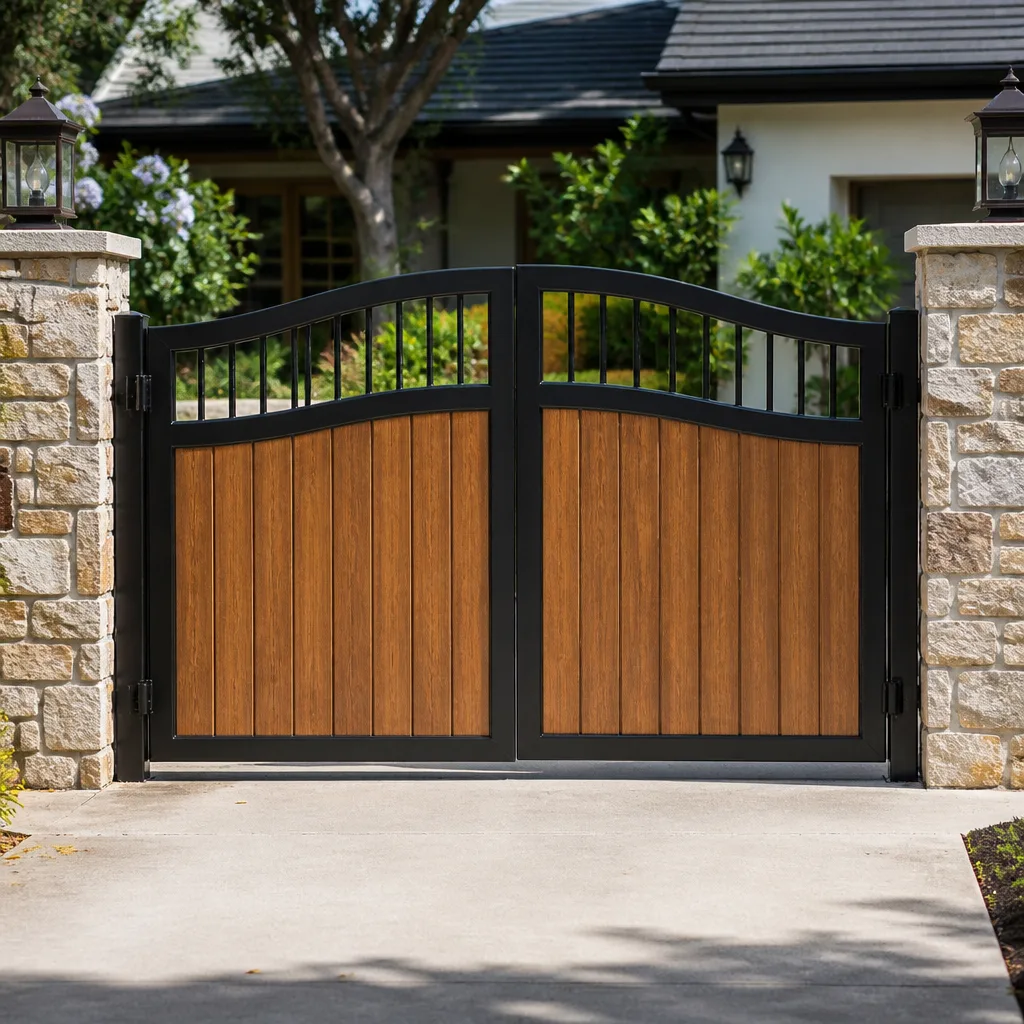 Wood & steel frame
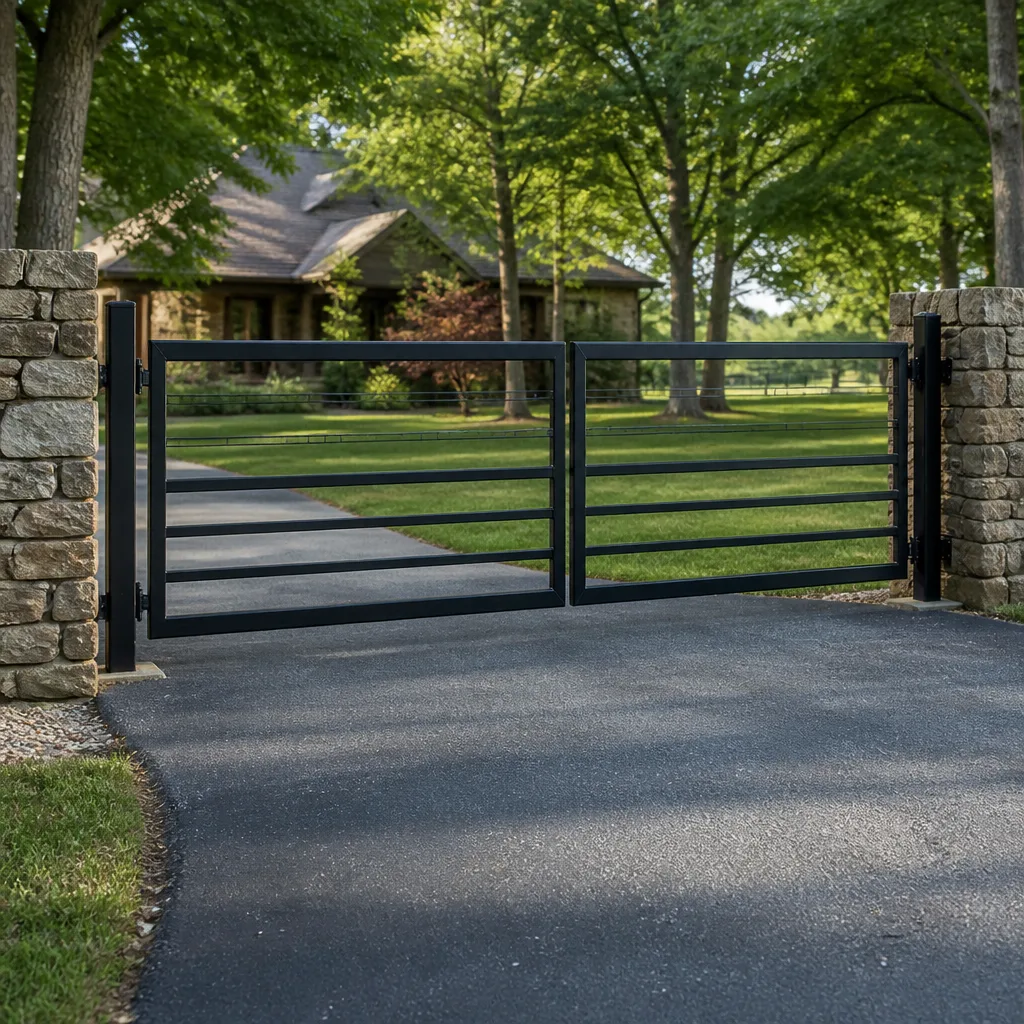 Farm & ranch
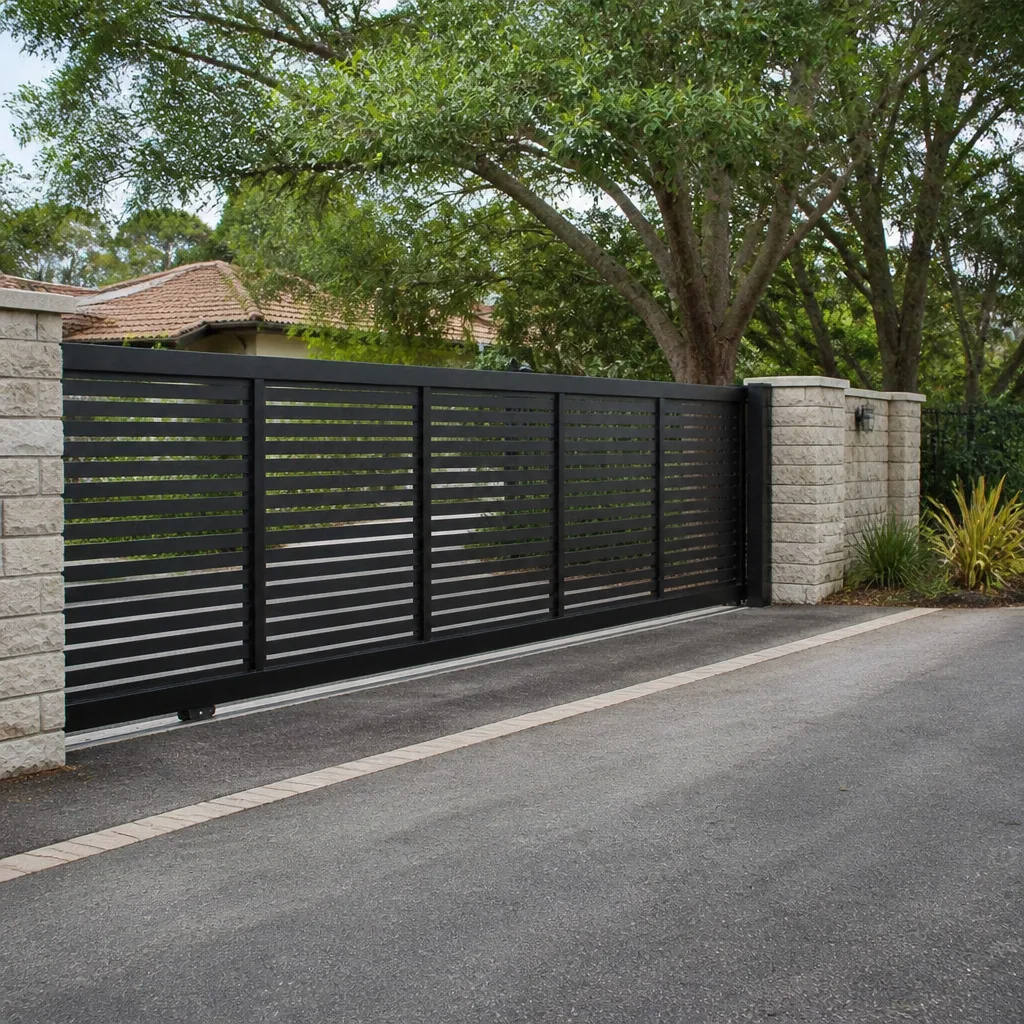 Sliding driveway gates
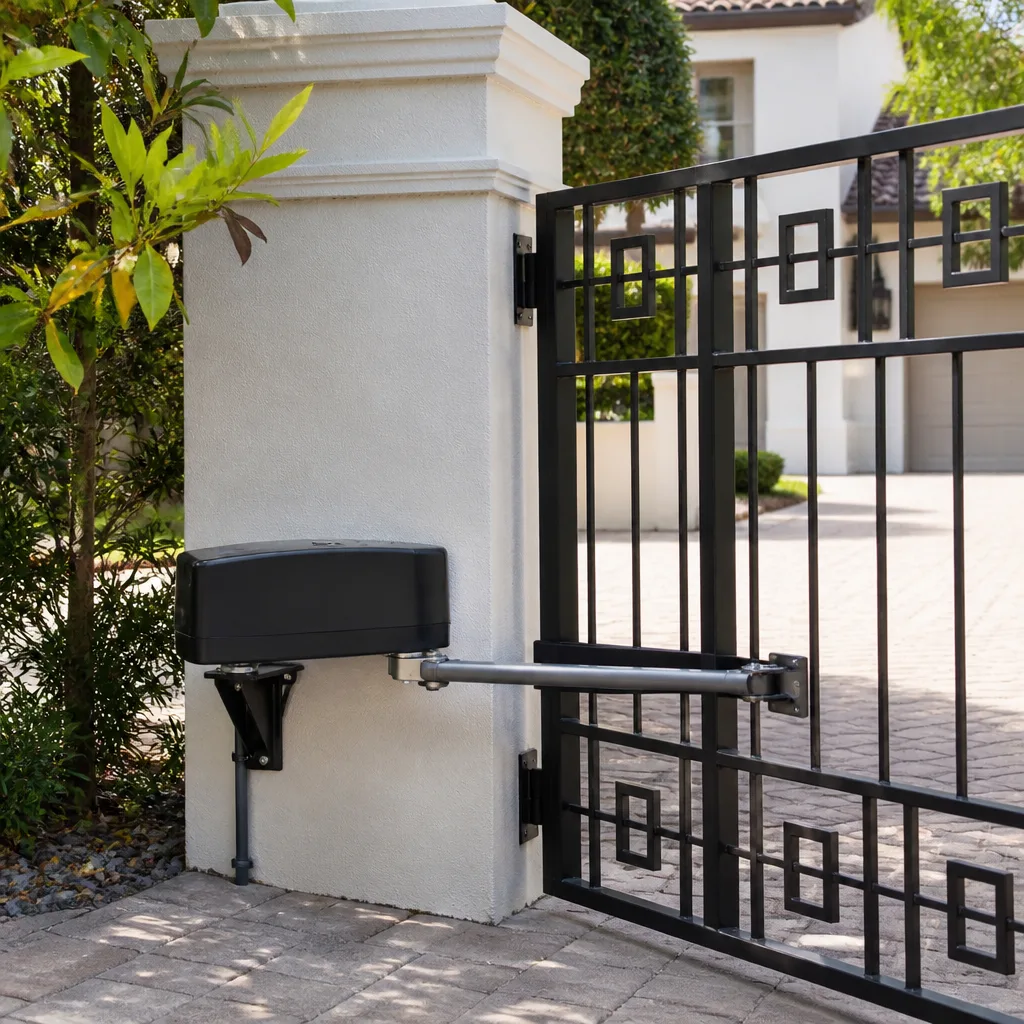 LiftMaster operators
Free on-site gate assessment - hinges, posts, and your LiftMaster or Nice gate operator checked before anything is quoted
The assessment is free and the quote is the invoice.
Get your free estimateThe Complete Guide to Gate Repair in Eastmoreland
A gate that swings cleanly in July can drag, bind, or refuse to latch by November, and the reason usually isn’t a broken part. Eastmoreland sits on some of the heaviest clay soil in the Portland area, and that clay swells with fall rain and shrinks through the dry months. When it moves, the post moves with it, and the gate that hangs from that post goes out of alignment. Most repair calls we get could be narrowed down at home first. This guide shows you how to tell a footing problem from a hardware problem, how Eastmoreland’s wet climate and clay ground shape which parts fail, and when a repair is genuinely a repair versus a sign the whole system needs rethinking.
Quick Answer
Most gate problems in Eastmoreland come down to one of three root causes: foundation shift from clay soil movement, moisture intrusion into the operator and wiring, or neglected hardware like hinges, rollers, and latches. Identifying which one you have determines whether you’re looking at a small part replacement or a larger structural correction. A trained technician can usually tell within minutes of an on-site inspection, and the written estimate tells you exactly what the fix costs before any work begins.
Styles & brands we work with
- Wrought iron
- Wood & steel frame
- Farm & ranch
- Sliding driveway gates
- LiftMaster operators
Table of Contents
- The Three Root Causes of Gate Failure in Eastmoreland
- How to Tell Footing Failure From Hardware Failure
- Swing, Slide, and Automated Gates: Different Failures in Wet Weather
- What Eastmoreland’s Clay Soil Does to Post Footings Over Time
- How to Document Your Gate System Before You Call Anyone
- When It’s a Repair and When It’s a Redesign
- Why Brand Familiarity Shortens the Diagnostic
- Safety: What You Should Never Adjust Yourself
The Three Root Causes of Gate Failure in Eastmoreland
Nearly every gate problem we’re called to in Eastmoreland traces back to one of three causes. The symptom on the surface rarely matches the cause underneath, and that gap is where homeowners waste money replacing parts that were never the issue.
Foundation shift is the big one here. Clay soil expands when it’s wet and contracts when it dries, and Eastmoreland’s wet winters followed by drier summers put every gate post through that cycle year after year. A post that has tilted even a fraction of an inch throws a swing gate out of plumb and a slide gate out of track alignment. The gate isn’t broken. The ground under it moved.
Moisture intrusion hits the electrical side. Rain works its way into control boxes, keypads, and underground conduit, and it reaches the control board, the wiring terminals, and the motor housing. An operator that works fine in August may start tripping, stalling, or refusing commands once the fall rains set in.
Neglected hardware is the slow failure. Hinges rust, rollers wear flat, latches loosen, and hinge bolts back out over a season or two. It’s the cheapest of the three to fix if you catch it early, and the most expensive if you let a worn hinge drag a gate out of square for long enough that the post takes the strain.
Knowing which cause you’re dealing with is the difference between a small repair and a large one. The rest of this guide breaks down how to tell them apart.
How to Tell Footing Failure From Hardware Failure
You can narrow down the cause in a few minutes at home without touching a tool. The trick is to watch how the gate moves rather than what it looks like standing still.
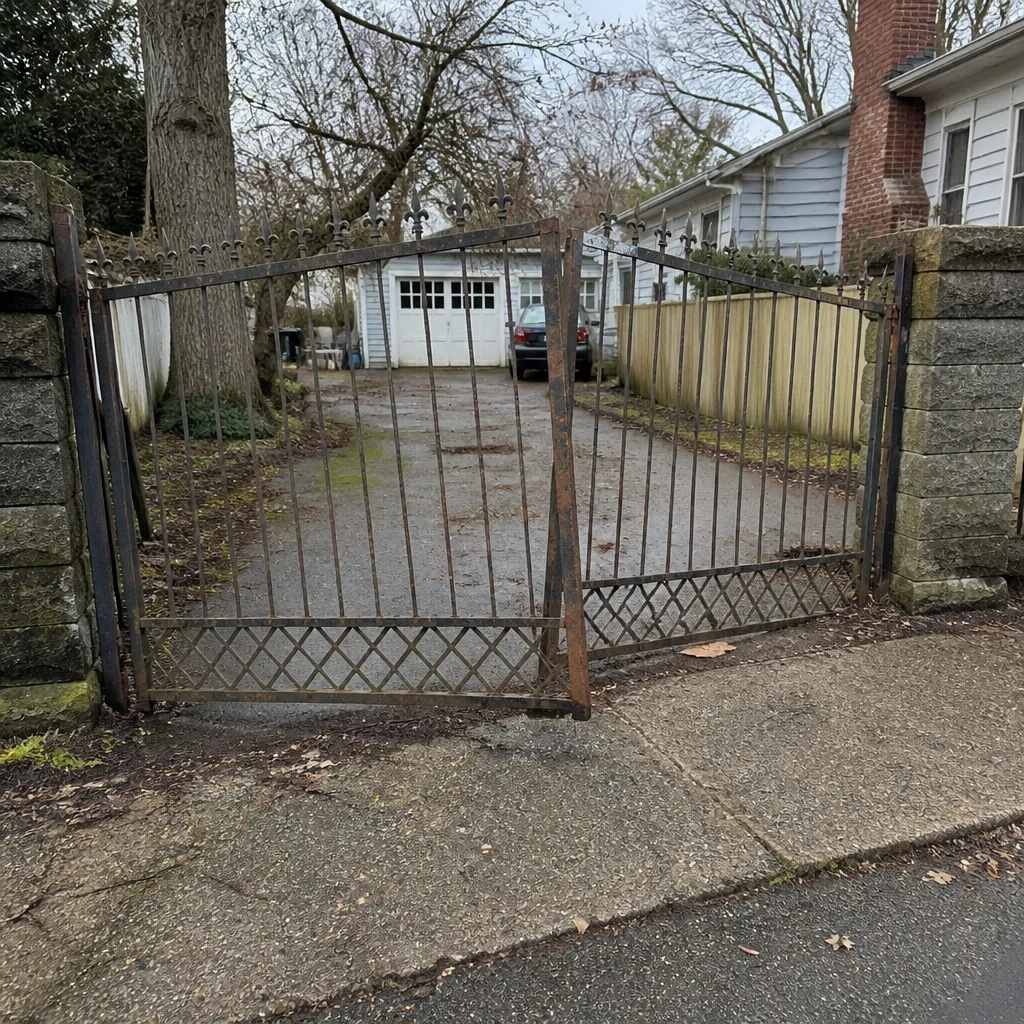
Start with a plumb check. Stand back and look at the post from two angles, 90 degrees apart. If the post leans, even slightly, you have a footing problem and no amount of hinge adjustment fixes it. A plumb post with a sagging gate points to hardware.
Then watch the swing. Open the gate a few inches and let it go. If it settles back to center on its own, that’s usually a hinge or alignment issue. If it swings freely one direction and binds hard the other, look at whether the post has tilted along that axis.
Finally, look at the gap between the gate and the post. A gap that changes from top to bottom as the gate travels means the post and the gate plane are no longer parallel. That’s structural, not hardware.
In our experience in Eastmoreland, the tell is often the driveway itself. Clay movement shows up as new cracks or heaved panels near the post footing before it shows up as a visibly leaning gate. If the ground around the post has shifted, the gate almost certainly has too. A trained technician confirms it on an on-site inspection with a level and a track gauge, but the checklist above usually gets you to the right answer before you pick up the phone.
Swing, Slide, and Automated Gates: Different Failures in Wet Weather
Portland’s wet climate doesn’t hit every gate type the same way. Knowing your gate type tells you where to look first when something stops working.
Swing gates are the most sensitive to post movement, because the whole gate hangs off two hinge points and any tilt transfers straight into binding at the latch. Wet weather also loosens hinge bolts and swells wooden gate frames, which can cause a gate that latched fine in summer to stick by November.
Slide gates ride on a track and rollers, and the failure mode is different. Water pools in the track, debris collects, and rollers wear on one side. Then winter rain freezes the roller, or mud packs the track and the operator keeps pushing until the gear strips. Slide gates on sloped ground in Eastmoreland are especially prone to the track draining poorly after heavy rain.
Automated gates add the electrical layer on top of both. Underground low-voltage wiring, control boxes, keypads, and limit switches all see moisture. An operator that runs on a dry day and fails after rain is telling you where the water is getting in. Operators from LiftMaster, FAAC, and Mighty Mule have different enclosure designs and different weak points when it comes to water, which is one reason brand familiarity matters when a technician shows up.
- Swing gate symptoms: binding at the latch, sagging at the free end, gate dragging at the bottom.
- Slide gate symptoms: grinding or chatter, operator stalling, gate jumping the track.
- Automated gate symptoms: arm running but gate not moving, intermittent stops, keypad or remote not responding, operator tripping a breaker after rain.
What Eastmoreland’s Clay Soil Does to Post Footings Over Time
The clay is the quiet cause behind most footing failures in Eastmoreland. Clay soil holds water and swells when saturated, then shrinks and cracks as it dries. Portland’s cycle of wet winters and drier summers runs the ground through that expansion and contraction every single year, and posts set in that ground move with it.
What that looks like in practice:
- Year one to three: the post settles slightly and the gate starts dragging a little at the latch. Hinge adjustment usually covers it.
- Year three to seven: the post tilts enough that hinge adjustment no longer works. The gate binds on one side and swings free on the other. The footing needs to be reset or the post re-set at proper depth.
- Year seven and beyond: the gate has been out of alignment long enough that hardware wears prematurely, welds on the hinge side develop fatigue, and the frame can go out of square. At that point the repair may involve re-setting the footing and correcting the gate itself.
Eastmoreland’s housing stock makes this more visible than in newer neighborhoods. Older driveways and older post installations were often set with shallower footings than today’s gate installers use, and a shallow footing in clay moves sooner. The fix is almost never adjusting a hinge. The fix is getting the post back to plumb, and that’s a decision to make with a technician who can see the footing and the gate together.
If you’re weighing re-setting a post against a new install, our gate installation team looks at both options on the same visit so you’re comparing real numbers instead of guessing.
How to Document Your Gate System Before You Call Anyone
Documenting your gate before you call makes every conversation faster and every estimate more accurate. A technician who arrives knowing your brand, model, and gate type can often bring the right parts and skip a return trip.
Do this before you pick up the phone:
- Photograph the whole gate from several angles. Include the open and closed positions, the post on the hinge side, the latch side, and the ground around each post. A photo of cracks in the driveway near the footing is genuinely useful.
- Find the brand tag on the operator. The tag is usually on the housing of the motor unit or inside the control box. Photograph it. Note the brand (Elite, LiftMaster, FAAC, Mighty Mule, and others all look similar if you’re not up close) and the model number if it’s readable.
- Find the control board. Open the control box if it’s safe to do so and photograph the board. Don’t touch any wiring. The photo alone tells the technician what they’re dealing with.
- Note the exact symptom in plain language. “It runs but doesn’t move” and “it moves but doesn’t latch” are entirely different repairs. Write down what it does, when it does it, and whether it started after rain.
- Photograph the keypad, intercom, or access control panel. If you have an access control system, a photo of the panel and the wire routing saves time on the estimate.
Have that set of photos ready when you call (888) 839-4209. It shortens the conversation, gets you a more accurate estimate, and helps the technician arrive prepared for your specific brand and gate type.
When It’s a Repair and When It’s a Redesign
Not every gate failure is a repair job. Sometimes a gate is working exactly as designed and the design no longer fits the property, the traffic, or the ground it’s set in. Knowing the difference keeps you from sinking money into a system that’s going to keep failing.
A repair is the right call when the gate was set correctly and something wore out or broke. Worn hinges, a failed operator, a control board that took on water, a latch that no longer lines up because the bolt backed out. The gate itself is sound, the footing is sound, and the fix is a part or a service call.
A redesign is the right call in these situations:
- The footing has failed repeatedly and re-setting the post hasn’t held through more than one winter.
- The gate type no longer fits the traffic. A swing gate that gets constant two-car traffic wears faster than a slide gate designed for that volume.
- The automation is obsolete and parts for the operator are hard to source. An older Mighty Mule that needs a control board may cost more to repair than a new operator costs to install.
- The access control has grown beyond the system. A single keypad was fine for a household; a property manager with multiple tenants and delivery access needs a proper multi-user system.
- The gate has gone out of square and the frame itself needs correction alongside the footing.
When a repair really is a repair, our gate repair team keeps it that way. When a redesign is the honest answer, we’ll tell you that too, and price it clearly. If the failure is on the motor side specifically, our gate motor & opener work covers the electrical layer, including the wiring, control boards, and automation components that most fence companies won’t touch.
Why Brand Familiarity Shortens the Diagnostic
Gate operators don’t diagnose the same way across brands. An Elite control board faults differently than a LiftMaster board, and a FAAC operator has its own sequence of limit switch tests. A technician who works on gates every day and knows these brands by name walks up to the gate already knowing where to look.
That’s why we work on the equipment you actually have rather than asking you to replace it. We’re experienced with LiftMaster, FAAC, BFT, Linear, Viking, Ghost Controls, DoorKing, Elite, and Mighty Mule. The range matters: Mighty Mule and Ghost Controls cover the residential side, while FAAC, BFT, and DoorKing cover the commercial-grade systems property managers and HOAs typically run. That breadth means a homeowner with a LiftMaster driveway operator and a property manager with a DoorKing multi-user entry system both get a technician who’s worked on their equipment before.
When we arrive having worked on your brand, the diagnostic is measured in minutes rather than a manual read on-site. That’s not a sales pitch. It’s the difference between a one-visit repair and a return trip for the right part.
Safety: What You Should Never Adjust Yourself
Some parts of a gate system look simple and are genuinely dangerous. We’d rather tell you to leave them alone than have a repair call turn into an injury.
The wiring that feeds an automated gate runs low voltage in most residential setups, but the source side of an access control system or operator transformer is not something to open and test with a household multimeter. Live wiring, control boards with capacitors that hold a charge, and intercom lines routed through a building can all cause injury or damage to the equipment. Electric gates also have safety sensors and reversing edges that are life-safety components. Improperly adjusted sensors on an automated gate have caused serious injuries to people and vehicles in the trade. If your gate reverses unpredictably or fails to reverse when it should, stop using the automation and have a trained technician look at it.
Slide gates carry their own hazard: a gate that has come off the track or has rollers worn on one side can drop. Don’t try to lift a heavy slide gate back onto a track by hand. Swing gates with a failing footing are similarly dangerous because the weight of the gate can shear a worn hinge off its post. Take photos from a safe distance and call a professional.
If you’re not sure whether something is safe to touch, treat it as not. A trained technician arrives with the right tools and the training to work on live access control and gate automation safely.
Common Mistakes to Avoid
- Adjusting hinges on a post that has tilted. If the post is out of plumb, tightening a hinge makes the binding worse. Check the post first, then the hardware.
- Replacing the operator when the problem is a faulted sensor. An operator that runs but doesn’t move is more often a safety sensor, a limit switch, or a control board fault than a dead motor. Diagnose before you buy a motor.
- Ignoring the change after rain. A gate that only fails after wet weather is telling you exactly where the water is getting in. Eastmoreland’s wet seasons make that pattern show up reliably, so note it and report it.
- Backfilling a failed footing with loose soil. Adding topsoil around a tilted post hides the problem for one season and makes it worse the next. Clay soil in Eastmoreland moves the whole footing, not just the surface, so a real fix means re-setting the footing to proper depth.
- Calling a general handyman for access control. Low-voltage wiring, control boards, and intercom systems need a technician who works on gates and access control regularly. A generalist will often diagnose the visible problem and miss the electrical one underneath.
- Not documenting the brand and model. A gate operator that arrives without a brand on the ticket may need a return trip for the right part. Photograph the tag before you call.
- Putting off a small repair through the dry season. A worn hinge or a slightly loose latch is cheap to fix in summer. Let it sit through a wet winter and the same failure can escalate to a footing or frame problem.
See the difference
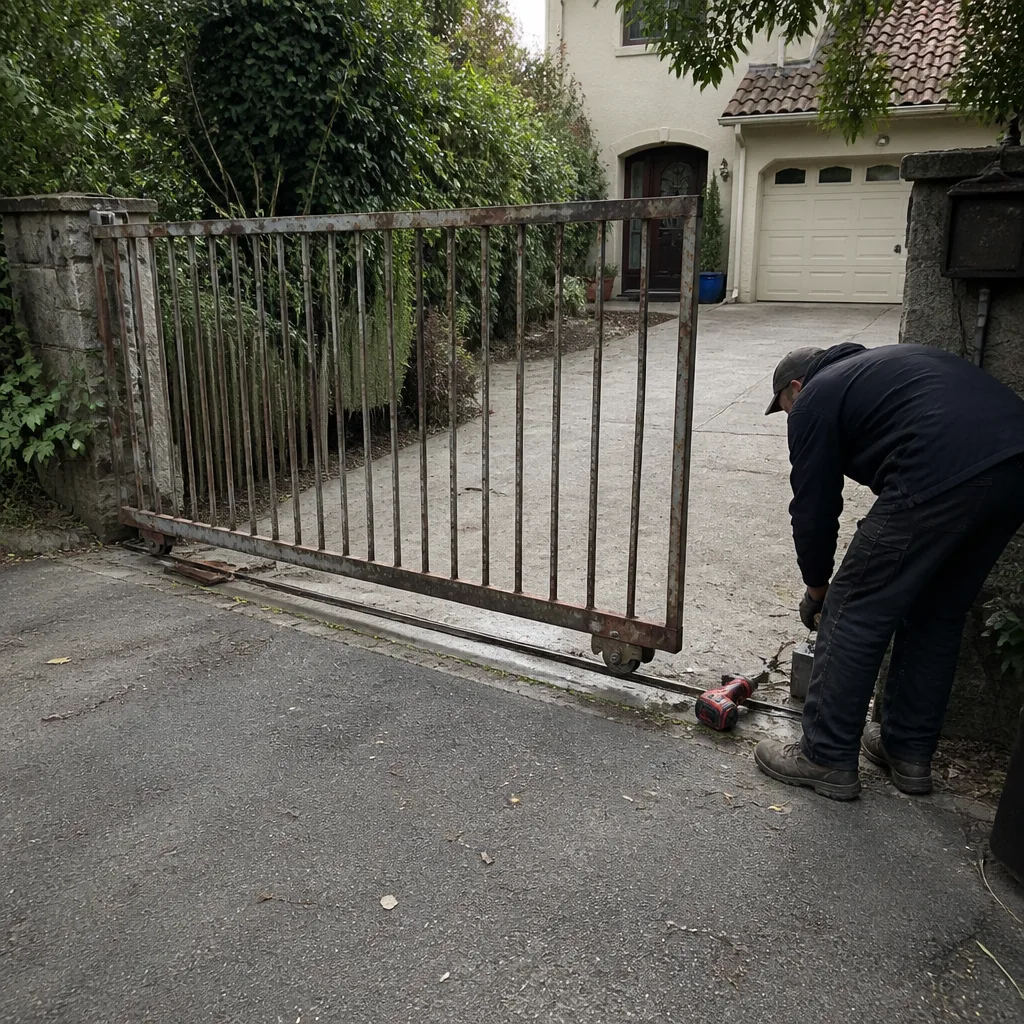 Before
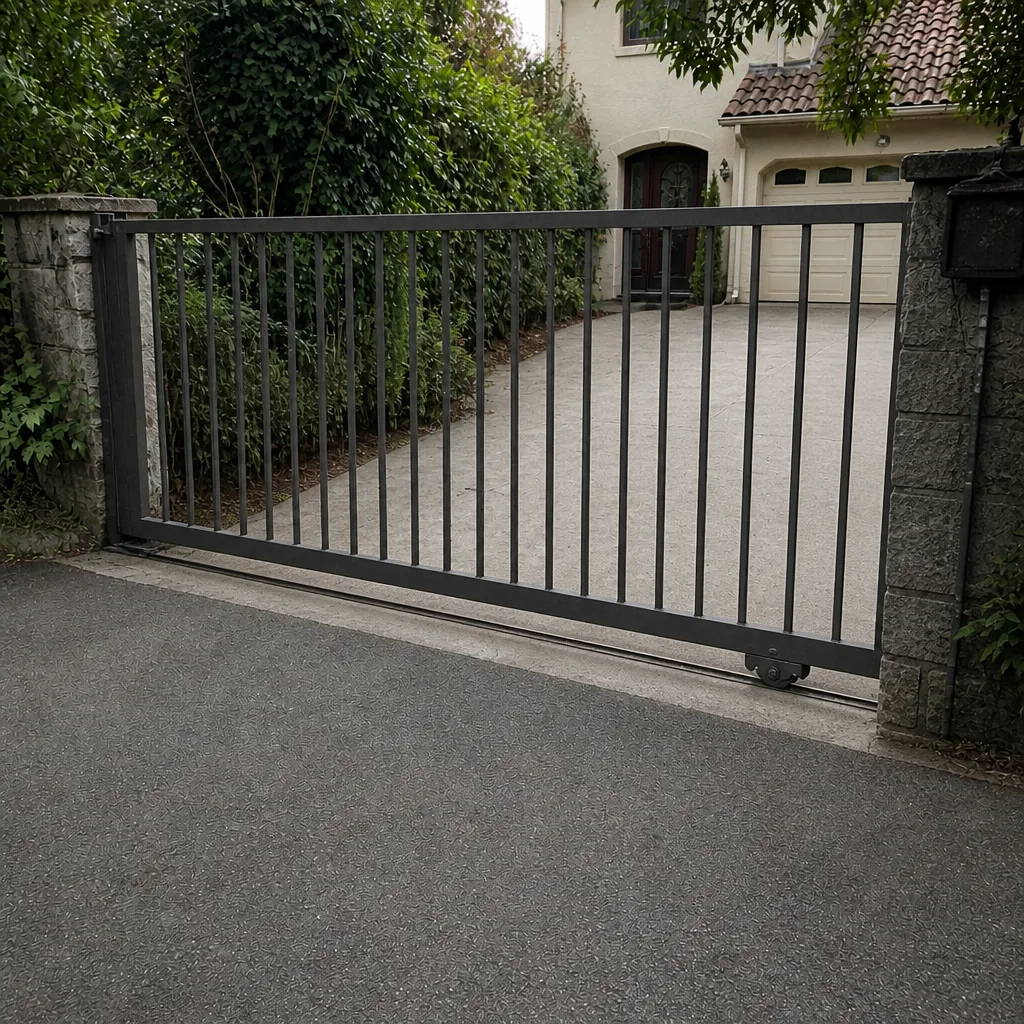 After
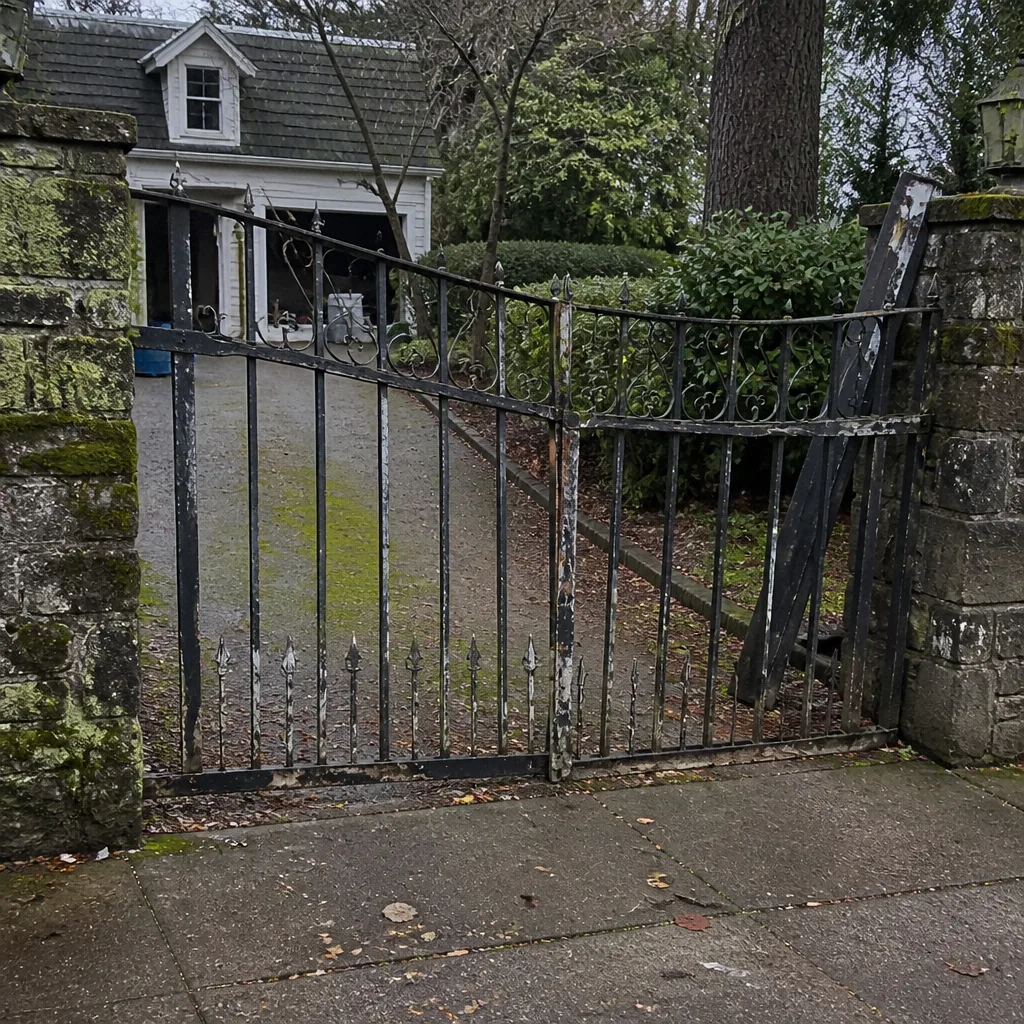 Before
 After
 Before
 After
When to Call a Professional
Call a professional when the post is out of plumb, when the gate has come off the track, when the operator is faulting, when the access control has stopped responding, when running the gate feels unsafe, or when you’ve adjusted the hinges and the gate still binds. Those are the scenarios where a trained technician saves money by getting the diagnosis right the first time. Gate Repair Eastmoreland is a dedicated gate specialist, not a generalist, so every service call, every technician, and every diagnostic tool is focused on gate systems from the motor to the keypad.
Gate Repair Eastmoreland offers free estimates in Eastmoreland. Call (888) 839-4209. We answer 24/7. Fast dispatch from 7am to 7pm, Sunday through Friday. The price is quoted and agreed before any work starts, and the written estimate sets the final price.
Frequently Asked Questions
Gate repair in Eastmoreland is priced per job by a written estimate after a technician inspects the gate, and the estimate is free. The final cost depends on whether the repair is hardware, footing, or an electrical fault on the operator or access control. The written estimate sets the price, and the price is agreed before any work begins, so there’s no invoice surprise. Call (888) 839-4209 for a free estimate.
Same-day repair is often possible for hardware and diagnostic calls. The right answer depends on the gate type, the brand of operator, and whether the part needed is one the technician has with them. A call gets you a booked appointment, a diagnostic, and a written price. Call (888) 839-4209. We answer 24/7. Fast dispatch from 7am to 7pm, Sunday through Friday.
It’s usually the post, not the hinges, if the gate binds more on one side than the other or if the gate has started dragging after a wet season. Eastmoreland’s clay soil shifts seasonally, and a post that’s tilted even slightly will throw a swing gate out of plumb. Check the post from two angles with a level. If it leans, the repair is re-setting the footing, not replacing hinges.
We work on LiftMaster, FAAC, BFT, Linear, Viking, Ghost Controls, DoorKing, Elite, and Mighty Mule, which covers both residential-grade and commercial-grade gate automation. Technicians diagnose by brand logic rather than by reading the manual on-site. Photograph the brand tag on the operator and have it ready when you call (888) 839-4209 for the fastest estimate.
The gate arm moving without translating into gate movement usually points to a safety sensor, a limit switch, or a control board fault rather than a dead motor. It’s one of the most common misdiagnoses in the field, and it’s why we recommend photographing the control board before you buy a replacement operator. An on-site estimate confirms the actual cause before any part is swapped.
Yes. Access control integration, keypads, intercoms, and low-voltage wiring are part of the same service. Most fence and gate companies won’t touch the electrical layer, so we cover it directly: the gate, the motor, the control board, and the keypad all belong to the same system. Call (888) 839-4209 to book an on-site estimate for access control work on your Eastmoreland gate.
The Bottom Line
Most gate failures in Eastmoreland trace back to one of three causes: post footing shift from the clay soil, moisture intrusion into the operator and wiring, or hardware wearing out on a gate that’s been out of alignment long enough to take the strain. Check the post before you replace the hinge. Note whether the failure started after rain. Photograph the brand tag, the control board, and the gate before you call. Those three steps alone narrow the diagnosis before a technician arrives, and they usually tell you whether the fix is a small repair or a larger correction. When the answer isn’t obvious, call a specialist who works on gates every day.
Call (888) 839-4209 for a free estimate on gate repair, motor and opener work, access control, or a full system evaluation. We answer 24/7. Fast dispatch from 7am to 7pm, Sunday through Friday. The written estimate sets the price, and you agree to it before any work starts.
Written by the team at Gate Repair Eastmoreland.