
Last updated November 25, 2026
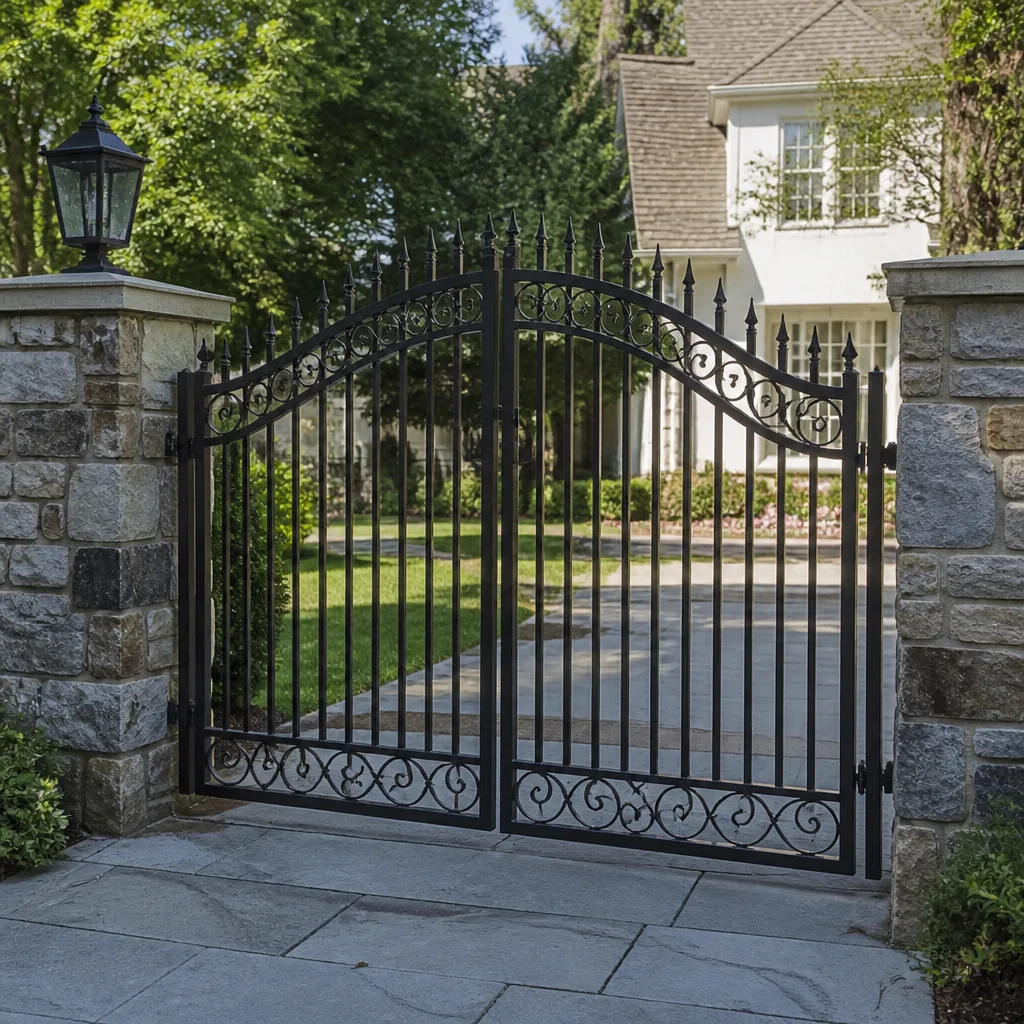 Wrought iron
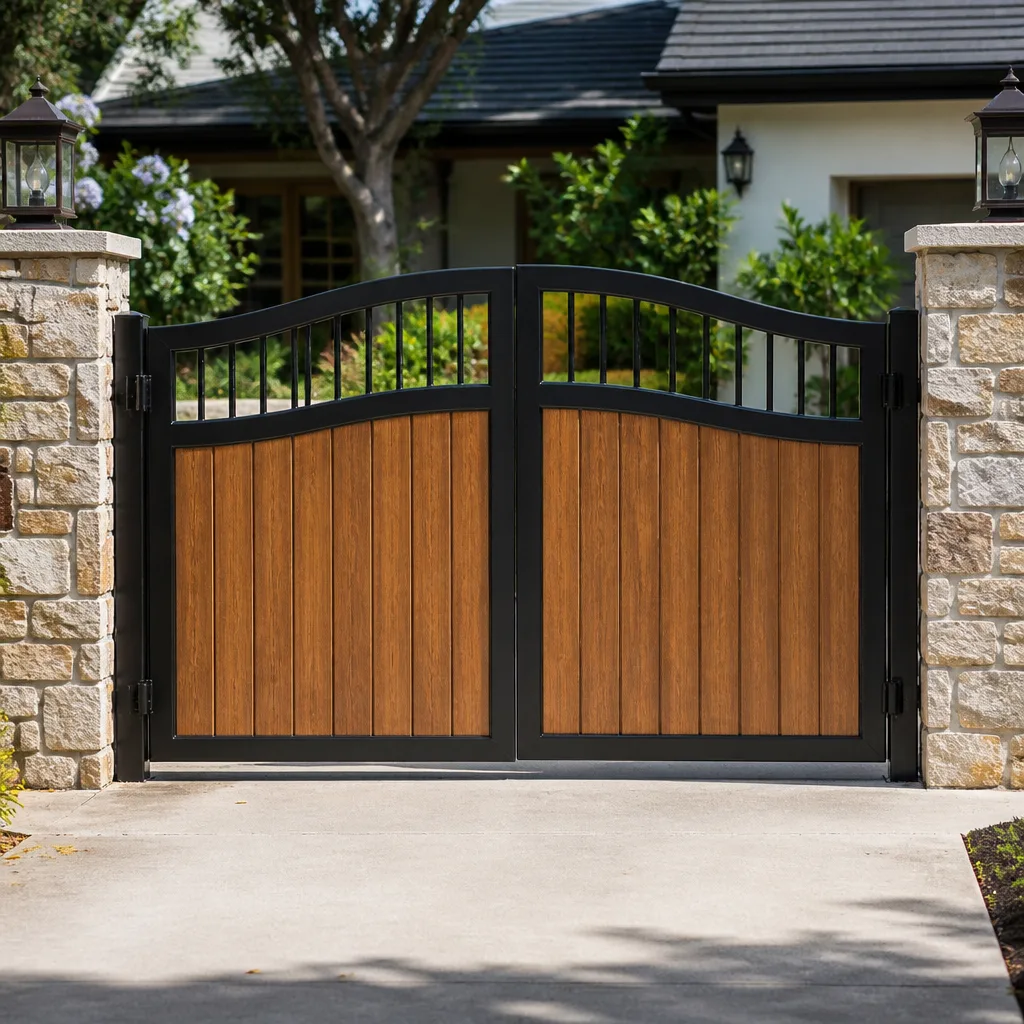 Wood & steel frame
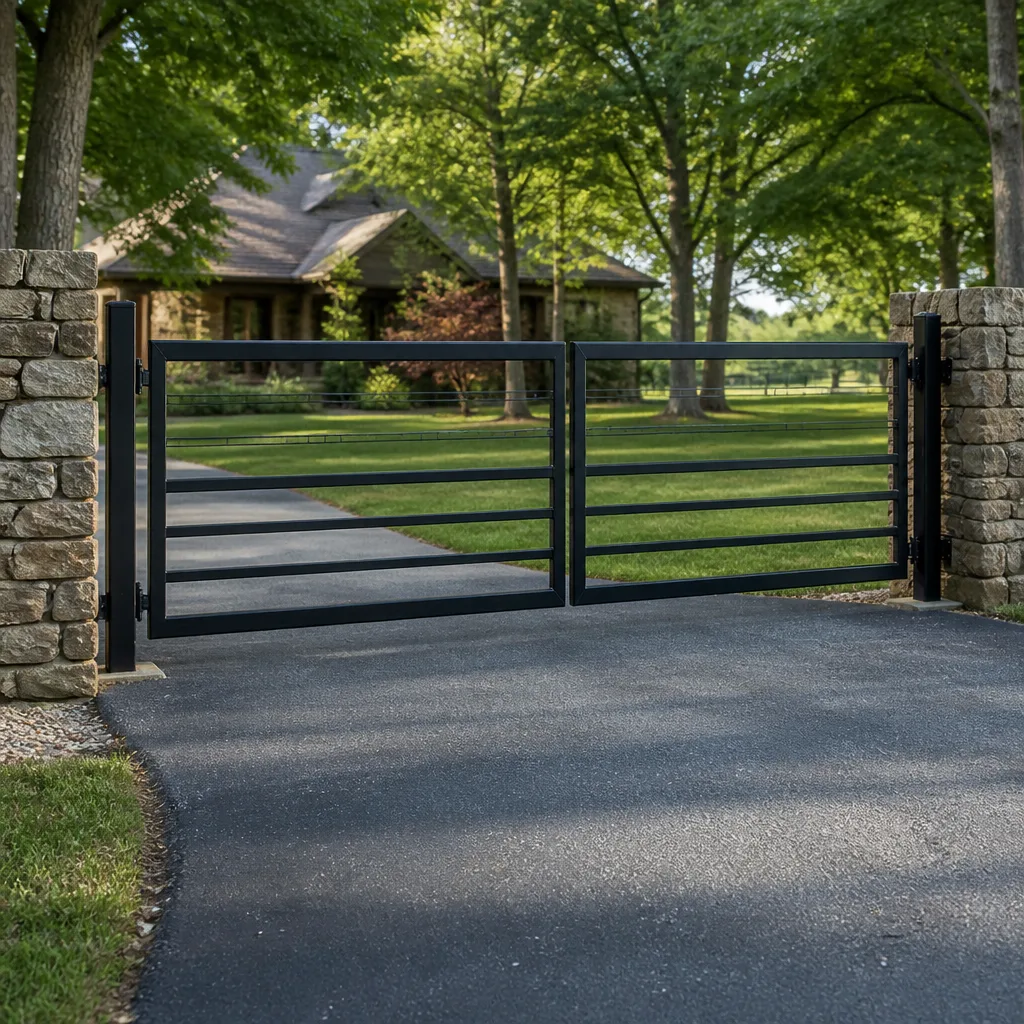 Farm & ranch
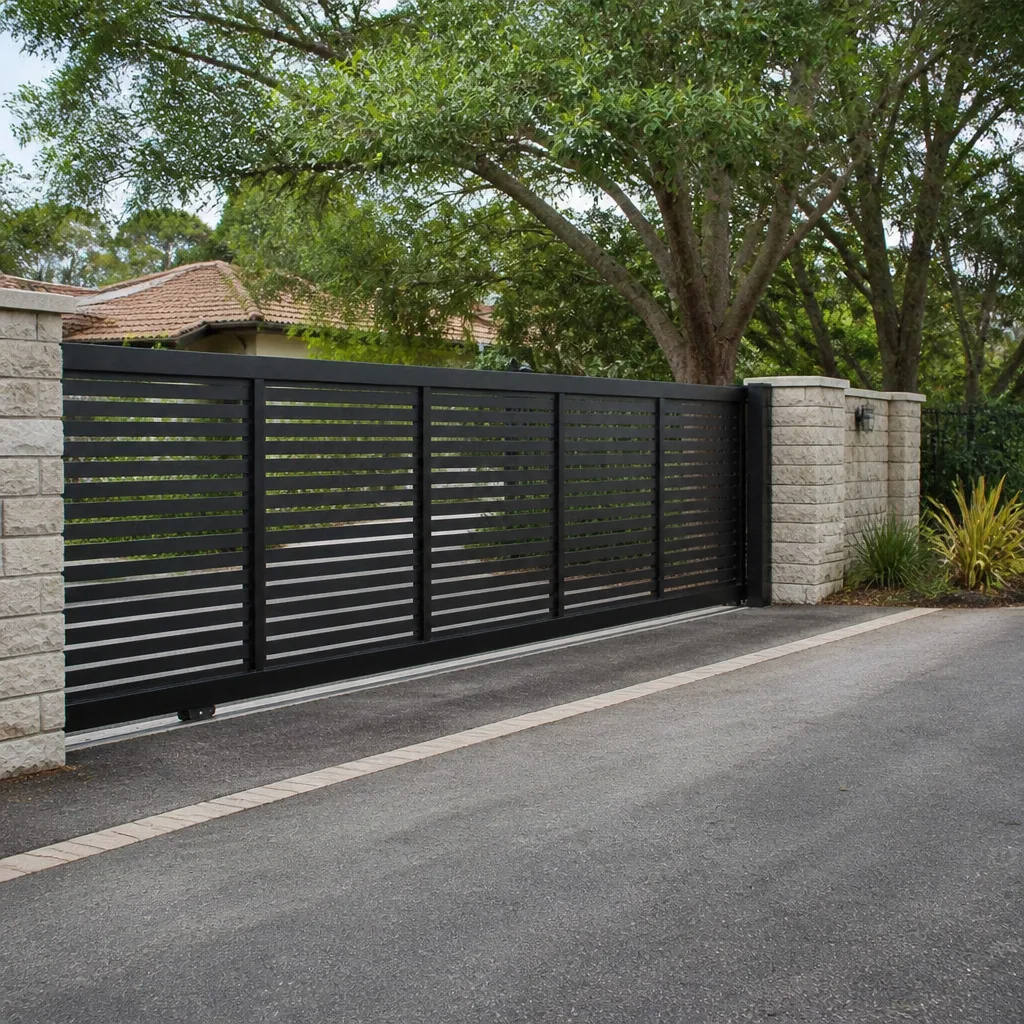 Sliding driveway gates
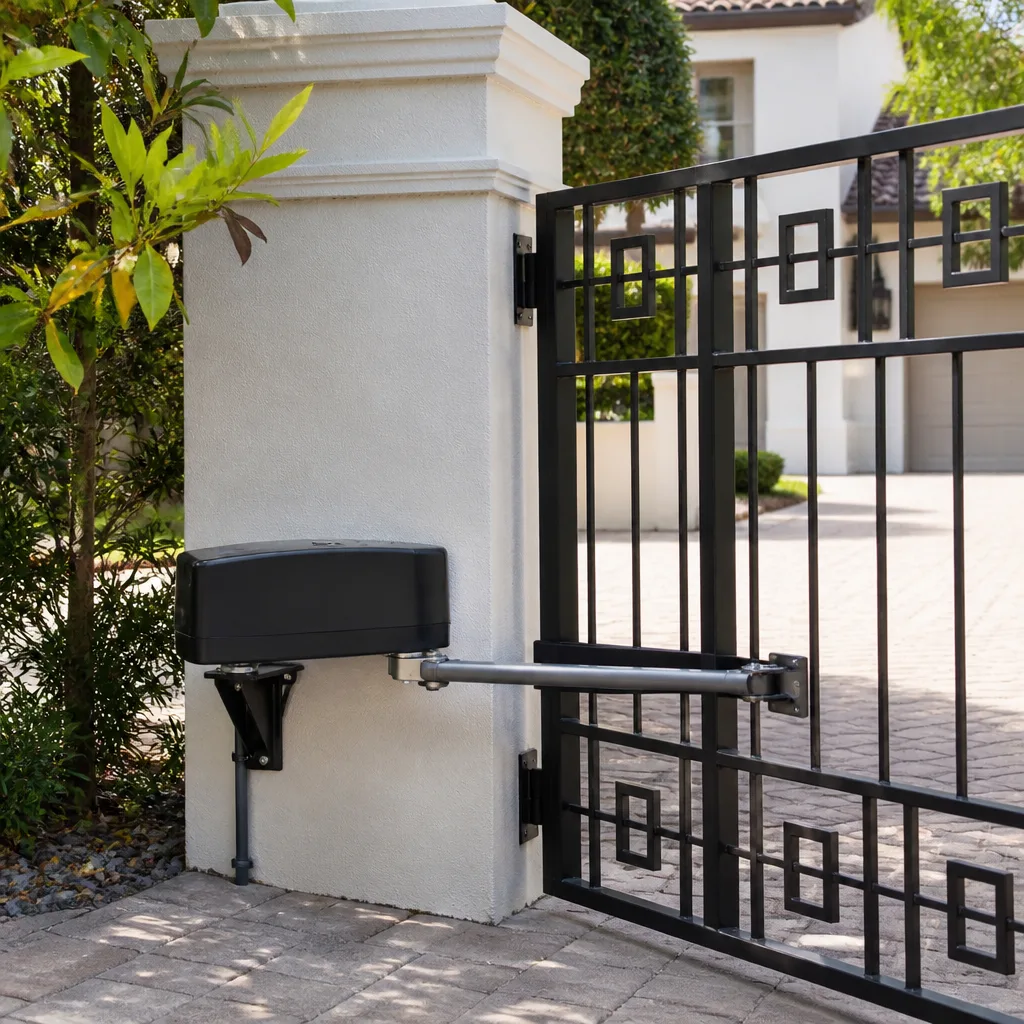 LiftMaster operators
Free on-site gate assessment - hinges, posts, and your LiftMaster or Nice gate operator checked before anything is quoted
The assessment is free and the quote is the invoice.
Get your free estimateGate Repair Warning Signs: An Eastmoreland Homeowner’s Reference Guide
Most gate problems announce themselves long before the gate stops working. The trouble is that homeowners tend to hear one symptom and assume one cause. A gate that reverses for no reason sounds like a motor issue, so people start pricing motors. A gate that only acts up on cold mornings sounds like a sensor issue, so people clean the photo-eyes and nothing changes. In our experience, matching the symptom to the right system is the whole game, and it’s the difference between a quick fix and a wasted repair bill. This guide walks Eastmoreland homeowners through what each warning sign actually points to, which ones mean stop using the gate, and which ones give you room to schedule a visit. Mention it once and move on.
Quick Answer
The most important gate warning signs fall into six systems: the motor, the safety sensors, the hinges and hardware, the track or guide, the controller and wiring, and the posts and footings. A gate that reverses randomly usually points to a dirty or misaligned photo-eye, while a gate that strains or reverses only in cold weather points to motor torque or battery weakness. Two signs mean stop using the gate immediately: a gate that moves on its own with nothing triggering it, and a gate where a hinge, weld, or post has visibly failed. Everything else gives you a reasonable window to book a repair.
Styles & brands we work with
- Wrought iron
- Wood & steel frame
- Farm & ranch
- Sliding driveway gates
- LiftMaster operators
Table of Contents
- The Symptom-to-System Matrix
- Warning Signs Unique to Automated vs. Manual Gates
- Why Cold Mornings Change the Diagnosis
- Cosmetic Rust vs. Structural Rust on Steel Gates
- Noise Diagnostics: Grinding, Clicking, and Squealing
- The Two Signs That Mean Stop Using the Gate
- The Signs That Give You a Reasonable Window
- Brand Logic: Why the System Matters
The Symptom-to-System Matrix
Here’s the reference table we use most often when a homeowner describes a problem over the phone. Read down the symptom column until you recognize your gate’s behavior, then look at what it usually points to. This isn’t a diagnosis, but it does keep you from chasing the wrong part.
- Reverses randomly, no pattern: safety sensor (photo-eye) obstruction, misalignment, or dirt on the lens. Most common cause of a reversing gate.
- Reverses only when cold: motor torque weakness, aging battery on a solar or DC system, or a binding hinge that stiffens with temperature.
- Reverses when something is near but not touching: sensor beam misalignment or a sensor knocked out of its mount.
- Gate stops mid-travel and stays put: controller fault, limit switch out of adjustment, or an overheated motor that has entered thermal protection.
- Gate moves slowly or strains to open: weak motor, binding hinges, or a worn track on a sliding gate.
- Grinding sound while moving: worn hinge pins, a dry track, or a chain/rack that has dropped tension.
- Clicking but no movement: control board relay, dead start capacitor, or motor binding.
- Squealing: metal-on-metal contact, usually hinge hardware that has lost lubrication or a bearing that’s failing.
- Gate sags, drags, or scrapes at one corner: hinge wear or post movement. On a sliding gate this often points to a footing problem.
- Gate won’t respond to any input: dead battery, tripped breaker, loose wiring at the controller, or a failed receiver.
We work on equipment from BFT, Linear, Viking, and Ghost Controls, and the symptom patterns are broadly the same across all of them. What changes is where to look first. Every repair starts as a gate repair job where we trace the symptom back to a system, and that tracing step is what saves time and money. In Eastmoreland, the most common dispatches come down to sensors that need cleaning and gates whose hinges have dried out after a summer of dry air.
Warning Signs Unique to Automated vs. Manual Gates
Automated and manual gates fail in different ways, and the failure modes homeowners ignore tend to be opposite. Automated gate owners get used to a little noise or a slow reverse because the motor does so much of the work that the gate still functions. Manual gate owners get used to a gate they can shove closed because they’ve always been able to.
On an automated gate, watch for these early signs:
- The gate starts moving earlier or later than it used to in response to the remote. That change usually traces to a delay setting, a battery losing voltage, or a receiver that’s picking up interference.
- The reverse distance increases. If the gate has always stopped the moment the sensor is blocked and now it takes an extra foot, the safety circuit is drifting.
- The courtesy light stays on or flickers. That’s the controller telling you something is getting an intermittent signal.
- The remote only works up close. Receiver antenna or battery, in that order.
- The gate runs, stops, and restarts on its own. Pretty much always a controller or limit switch problem, rarely the motor.
On a manual gate, the signs are quieter and the consequences are worse because no motor is guarding against damage:
- A hinge pin that has started to oval the hole. You’ll feel a slight drop when the gate swings past a certain point.
- The gate no longer sits level when closed. Half an inch of sag at the latch is a hinge or post problem.
- The latch drags or needs a lift to close. Classic early footings or hinge wear.
- Paint cracking in a spiderweb pattern near a hinge plate or weld. That’s metal moving under the paint.
Manual gate owners in Eastmoreland routinely push a sagging gate along for a full season without noticing the hinges are the culprit rather than the post. By the time it becomes a full failure, the repair has grown because post reinforcement is now in scope. Catching it at the “slight drop” stage usually keeps it a hinge and hardware job.
Why Cold Mornings Change the Diagnosis
Weather around Eastmoreland is mild by most standards, but the cool, damp mornings that settle in for a stretch of weeks are enough to surface motor weakness on a gate that seems fine by midday. The pattern matters: a gate that reverses randomly throughout the day is a sensor problem. A gate that only reverses on the first few cycles of a cold morning and then works fine for the rest of the day is a torque problem.
Here’s why. Motor torque is a function of available voltage and internal resistance, and both shift with temperature. On a DC system running from a battery (common with Ghost Controls and several Viking models), the battery’s ability to deliver current drops when it’s cold. The controller sees slower movement and flags it as an obstruction, so the gate reverses. On an AC system, the motor may simply be aging and the cold pushes it past its margin. Either way, replacing the sensor won’t help.
So how do you tell the difference before you call?
- Clean the photo-eye and test again the same day. If the gate now works fine even on a cold morning, you had a sensor problem all along.
- If reversing still happens only on the first few cycles of a cold morning, the sensor is not the cause. Note how many cycles it takes before the gate behaves normally, and tell the technician.
- Listen to the gate on a cold morning. If it opens more slowly on that first cycle than on a warm afternoon, you’re looking at torque, not detection.
- Check whether the gate has a battery. Solar and DC gates almost always do, and a battery that’s aging shares the cold-morning symptom with a motor that’s weak. Both are worth testing.
That difference between a sensor that fails and a motor that can’t push in cold weather turns out to be the single biggest source of wasted service in Eastmoreland. When we get a call about a gate motor & opener problem that only happens in the morning, we know the sensor is not on the list of suspects.
Cosmetic Rust vs. Structural Rust on Steel Gates
Most steel gates in Eastmoreland will show some surface rust eventually, and most of it is harmless. The problem is that the cosmetic kind and the structural kind can look similar from ten feet away, and only one of them affects whether the gate is safe to operate.
Cosmetic rust sits on the surface. It’s orange-brown, it’s on the flat panels, and when you push it with a screwdriver it doesn’t give. It’s a paint maintenance issue, not a safety issue. Wire-brushing and repainting will handle it.
Structural rust is in the joints. Look specifically at these spots:
- Around hinge welds and hinge plates. If the metal around the weld is pitted, flaking, or thin enough to flex under a screwdriver, the hinge anchor is weakening.
- At post-to-frame connections. The gate frame is only as strong as where it meets the posts, and rust there affects both alignment and safety.
- Inside hollow sections. Tap the frame with a wrench. A dead, hollow, crunchy sound instead of a clean ping means the inside has rusted and the paint is hiding it.
- Along the bottom rail, especially near the ground. This is where moisture sits longest and where the structural rust starts.
- On the chain or rack of a sliding gate. Rust there means constant friction, so the motor fights the gate every cycle.
The reason it matters so much comes down to what a steel gate does when it fails. A panel with cosmetic rust keeps its strength. A panel with structural rust at the hinge welds can shear while the gate is in motion, and that’s the failure mode that injures people and damages vehicles. If you can’t tell which kind of rust you’re looking at, treat it as structural until a technician confirms otherwise, and don’t operate an automated gate whose hinges look compromised. When a gate is at that point, we recommend a fresh install rather than a repair, and our gate installation service covers that transition from inspection through commissioning.
Noise Diagnostics: Grinding, Clicking, and Squealing
Noise is the most informative warning sign a gate gives you, because each sound tends to point to a specific subsystem. What a sound means also depends on whether the gate swings or slides, so we separate them here.
- Grinding on a swing gate: worn hinge pins or hinge bushings. The pin has worn a slot and the gate is dragging metal on metal as it swings.
- Grinding on a sliding gate: a dry track, worn rollers, or a rack-and-pinion gear that has lost alignment. Inspect the track for debris first, then listen for whether the noise comes from the wheels or the motor.
- Clicking but no movement: almost always electrical. Relay on the control board, start capacitor, or a loose connection at the motor terminals. If the click comes from the controller, the motor likely isn’t receiving power at all.
- Squealing while moving: a bearing or bushing that’s lost lubrication, or metal contacting metal where it shouldn’t. Squealing is a warning to grease something before it becomes grinding.
- Clunking at the start and stop: mechanical slack in the drivetrain. On a swing gate this is often the arm connection; on a sliding gate it’s usually the rack or the drive gear.
- Buzzing from the operator box: electrical. Could be a failing transformer, a stuck relay, or a control board that’s trying to start the motor and being prevented. Do not open the operator housing to investigate this yourself. Low-voltage gate wiring and control boards carry real risk of shock and burn even when you think the power is off.
Any buzzing, burning smell, or heat at the operator box is a technician’s call, not a homeowner’s. Our technicians have up to 15 years of experience and they treat every electric gate repair as a controlled, de-energized diagnosis for a reason.
The Two Signs That Mean Stop Using the Gate
Most gate problems give you room. Two do not, and we want those two front and center. If either of these is happening, stop using the gate now and call a technician before anyone operates it again.
Sign one: the gate moves without any input. A gate that opens or closes with nothing triggering it, no remote command, no keypad entry, no loop detection, is exhibiting uncontrolled motion. The cause is usually a failed control board, a stuck relay, or a receiver that’s picking up a stray signal. On a heavy swing or slide gate, uncontrolled motion is a crushing hazard. Don’t put a vehicle or a person in the path to test it, and don’t try to disconnect or rewire the operator yourself to “see if it helps.”
Sign two: visible structural failure at a hinge, weld, or post. If a hinge is separating from the frame, a weld has cracked visibly, a post is leaning or has rotated, or a sliding gate has come off its track, the gate’s structural integrity is compromised. A gate that fails under load can fall on whatever is beneath it. Keep people and vehicles clear, and don’t attempt to move it manually, because the same loss of integrity that caused the failure is the thing that makes manual movement dangerous.
There’s a third case that belongs here in practice: any gate where the operator box is buzzing, smelling of hot plastic, or getting noticeably warm. That’s an electrical fault, and it needs the power isolated at the breaker before anyone touches or diagnoses it. We can’t say it’s a stop sign the way the first two are, but it’s close, and treating it as one is the right call.
For either of the two stop signs, the gate should be taken out of service, not “watched for a while.” Call (888) 839-4209. We answer 24/7. Fast dispatch from 7am to 7pm, Sunday through Friday.
The Signs That Give You a Reasonable Window
Every other warning sign in this guide gives you time to schedule a repair rather than drop everything. That’s a useful distinction because it lets you plan the visit around your own schedule instead of panicking. The signs that give you a window usually include:
- Gradual slowness. The gate opens a hair more slowly than it used to. Hinge lubrication, motor wear, or battery age are the usual culprits. Schedule it within the next couple of weeks.
- Occasional random reversing. Still functioning most days, but reversing without obvious cause. Get the photo-eye cleaned and tested before booking anything more expensive.
- Cosmetic rust. Nothing structural yet, but heading that way if ignored. Plan a paint or treatment visit within the season.
- Squealing without grinding. A lubrication issue today, a hardware replacement tomorrow if ignored. Book a hinge or bearing service.
- Slow response to remotes, short range, flaky keypad. Access control issues that are inconvenient but not dangerous. Worth a diagnostic call.
- A gate that stays put when it should close. Annoying, but not a safety hazard on its own. Get it booked within a week or two.
The trick with “reasonable window” signs is to actually schedule the repair rather than book the problem indefinitely. Most homeowners in Eastmoreland who let a slow gate ride through a full rainy season end up replacing a motor or a hinge set that would have been a much smaller job in the fall. If a symptom has been there for more than a month, treat it as an upcoming priority and not a someday item.
Brand Logic: Why the System Matters
A gate is not a generic mechanism. The controller in a BFT system does not diagnose the same way as the controller in a Linear or a Ghost Controls system, even if they use the same kind of photo-eye on the outside. Knowing the brand means knowing where the reverse sensitivity setting lives, what series of beeps or LED blinks corresponds to what fault, and which subsystem usually fails first on that platform. That’s what we mean when we say we work on your brand. A technician who reads the manual on-site can eventually find the same answer, but not before running several tests your gate doesn’t need.
Our technicians are familiar with LiftMaster, FAAC, BFT, Linear, Viking, Ghost Controls, DoorKing, Elite, and Mighty Mule, which covers the residential and commercial systems common in Eastmoreland. We also handle full access control integration, meaning keypads, intercoms, and wiring, in the same visit as a mechanical repair. The gate you’re diagnosing and the access control you’re using to open it often share a controller, and a technician who only knows the mechanical side can’t trace problems that cross over.
That’s the difference between a gate-only specialist and a company that handles gates alongside a dozen other trades. We work on gate systems every day, from manual swing gates through to multi-unit electric access control, and the parts on our diagnostic list are gate parts. It’s the reason to start with a focused specialist rather than a generalist.
Common Mistakes to Avoid
- Replacing the motor when the photo-eye is dirty. The most common and most expensive mistake. Clean and test the sensor before pricing anything else, and see whether the gate still reverses.
- Assuming cold-morning reversing is a sensor issue. If the gate works fine all afternoon but reverses on the first few cycles of a cool morning, the sensor is not your problem. Torque, battery, or hinge binding is, and those need a different test.
- Greasing a track that needs to be cleaned first. Grease on top of grit becomes grinding paste. Clean the track, then lubricate it, and not the other way around.
- Pushing a sagging manual gate open for months. This is the one sign manual gate owners habitually ignore, and pushing past a sagging hinge accelerates wear on the post it’s anchored to. The eventual repair is a footings or hinge job, not the simple hinge adjustment it would have been at the beginning.
- Ignoring cosmetic rust until it becomes structural. Surface rust on flat panel steel is manageable for years. Structural rust at hinge welds and post connections is a safety issue, and the two look similar if you’re not checking the joints.
- Opening the operator box to investigate buzzing, heat, or a burning smell. Low-voltage wiring still carries enough current to hurt you, and control boards can hold a charge. Let a technician handle any fault inside the operator housing.
- Treating a stop sign as a slow sign. A gate that moves on its own or has visible structural failure doesn’t need more diagnostics from the homeowner. It needs to come out of service and be seen.
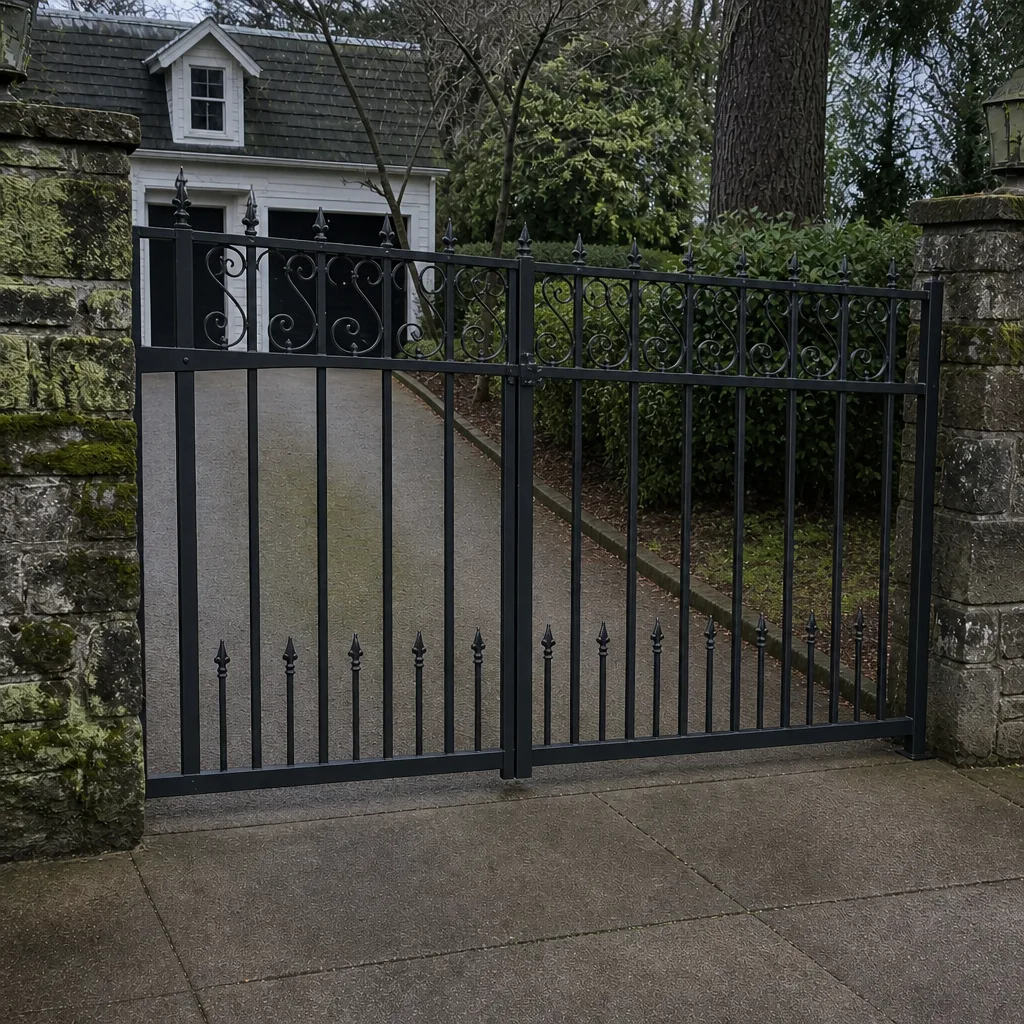
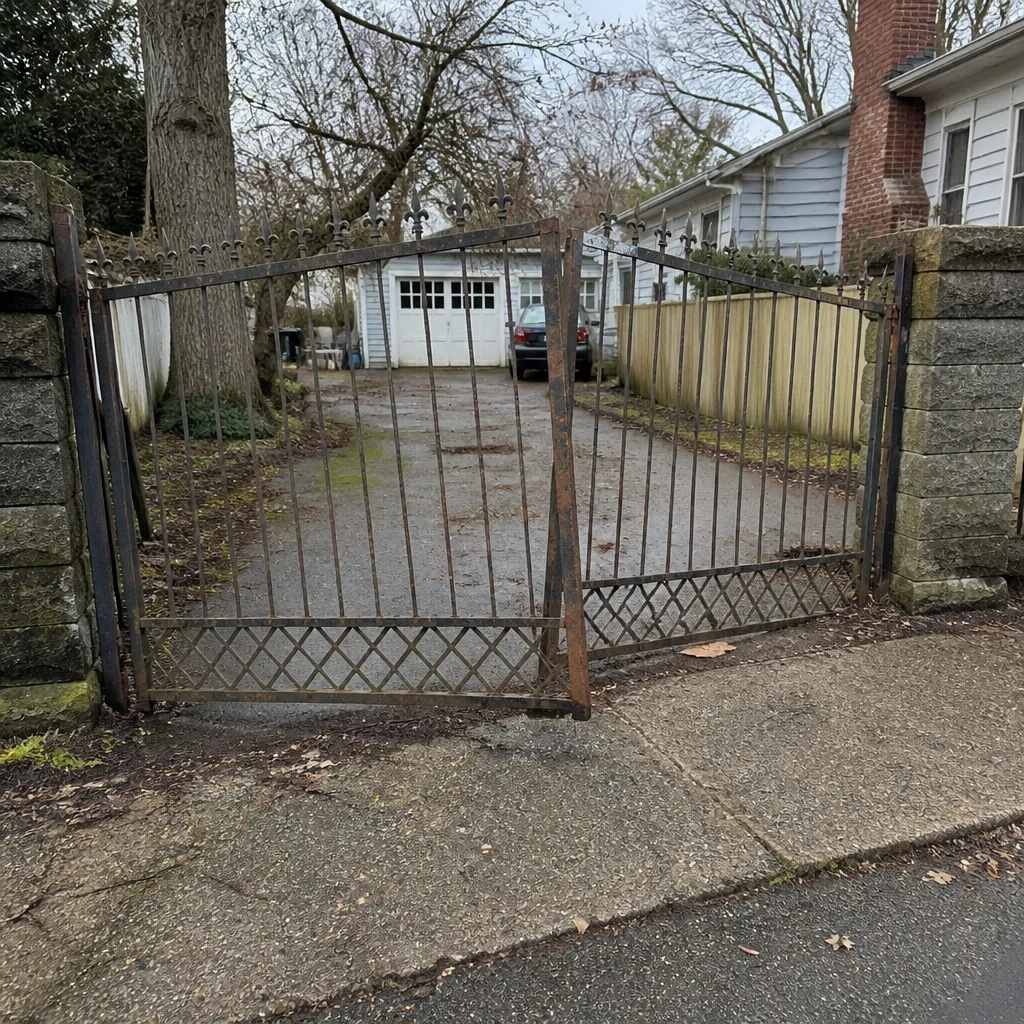
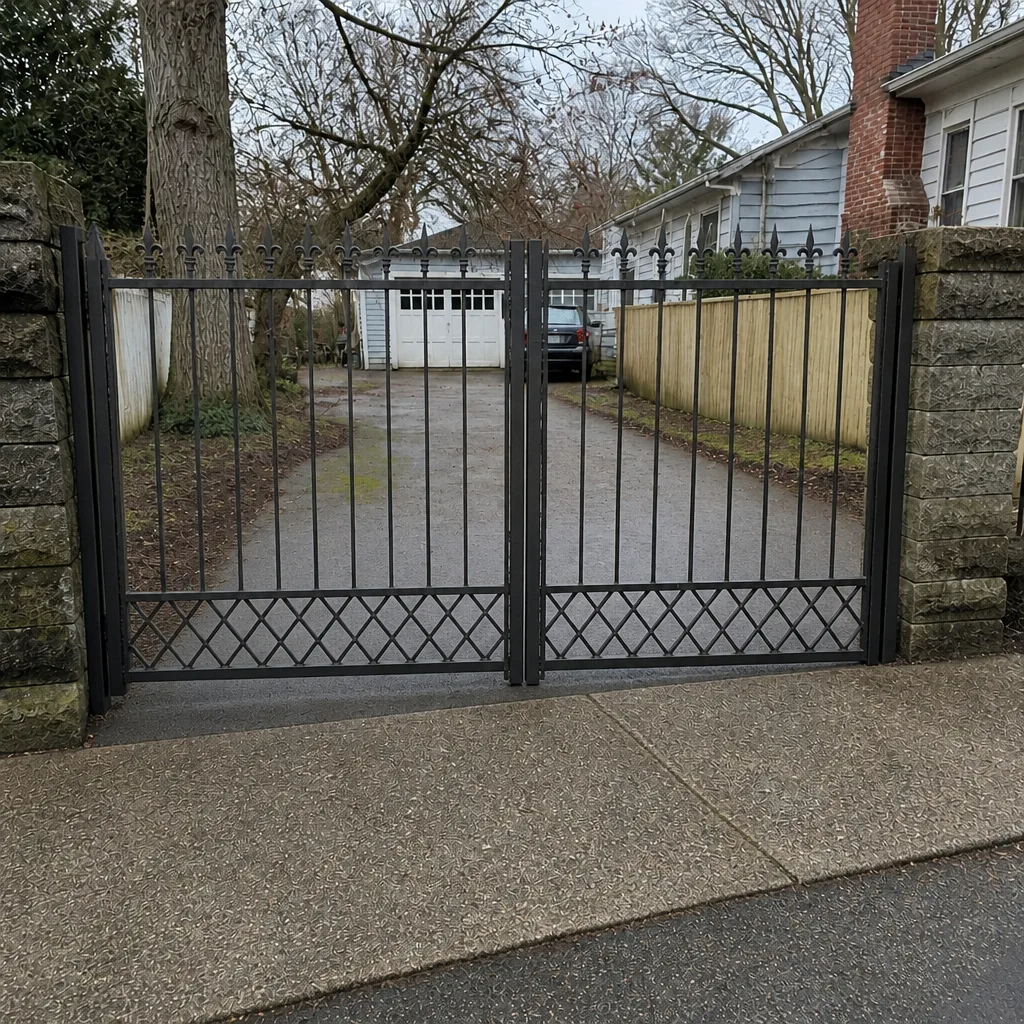
See the difference
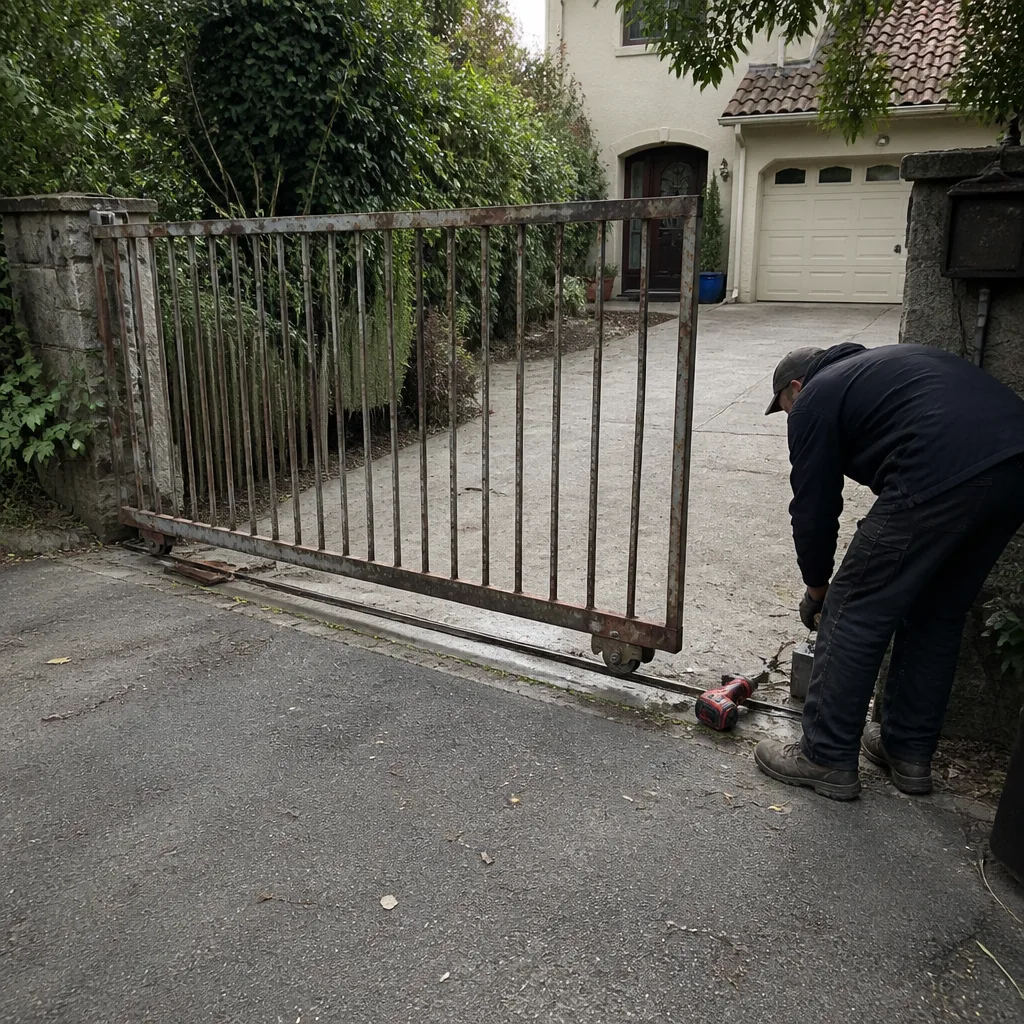 Before
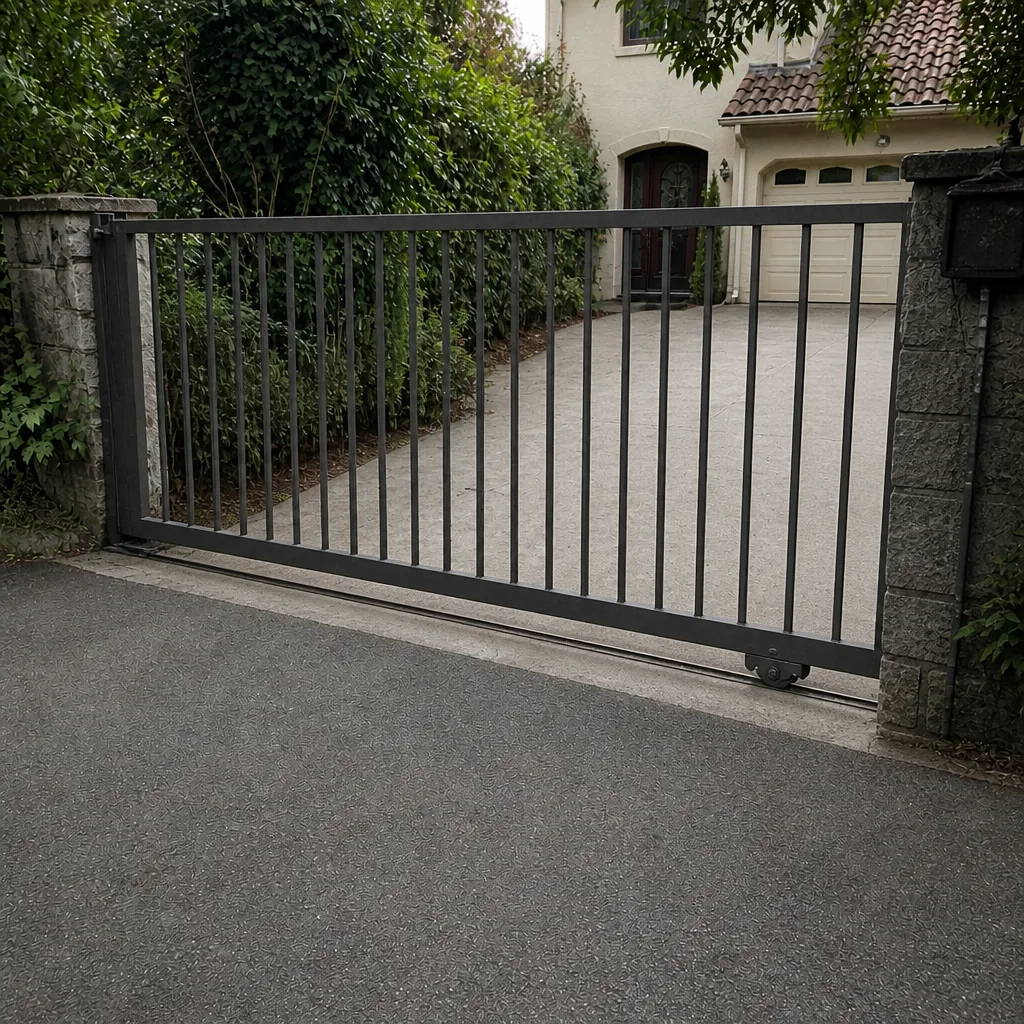 After
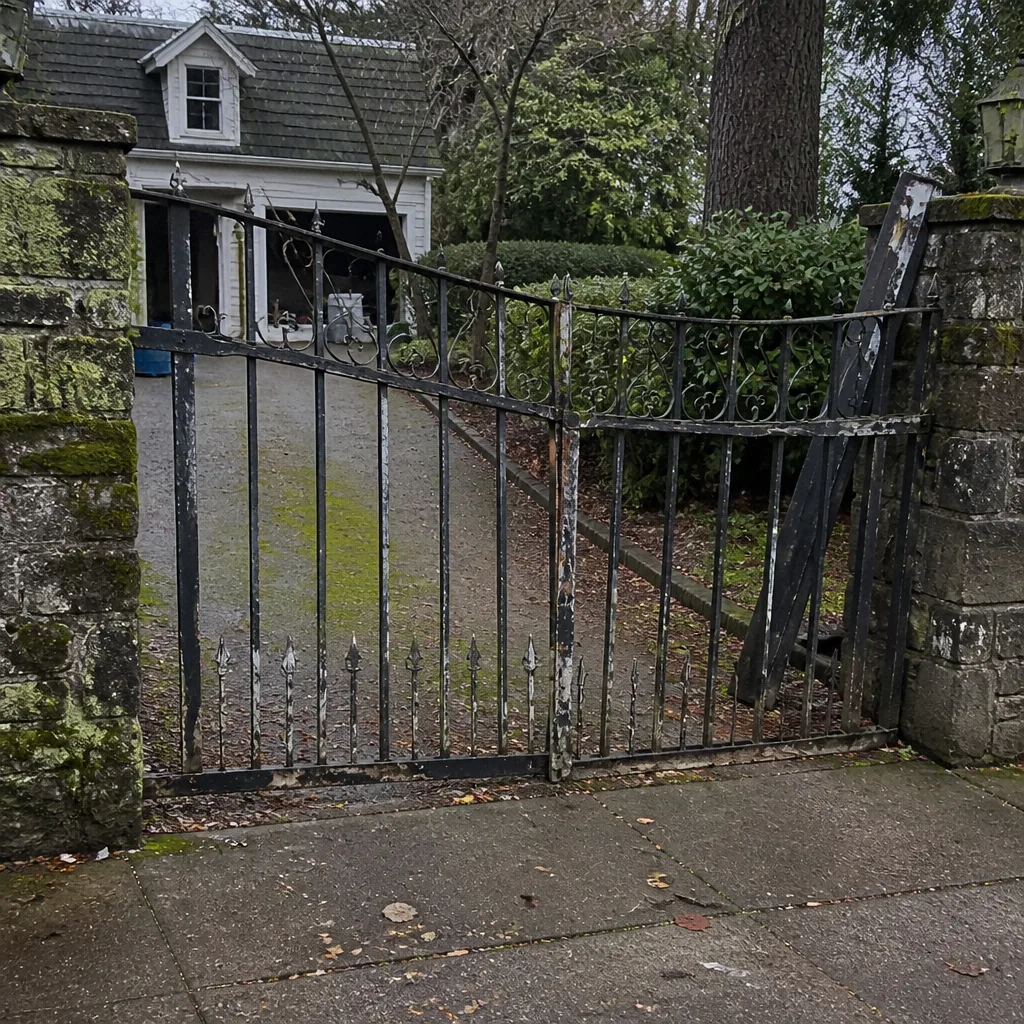 Before
 After
 Before
 After
When to Call a Professional
Call a professional when the symptom you’re seeing needs a subsystem you can’t safely test. Sensors, hinges, and lubricants you can check yourself. Motors, controllers, wiring, and anything inside the operator housing you shouldn’t. Call specifically when the gate moves with no input, when a hinge or post is visibly failing, when the operator box buzzes or heats up, or when cold-morning reversing has continued after the sensor was cleaned and the gate was otherwise behaving. Call too when a cosmetic issue is heading toward structural (rust at the joints, a sagging gate that has stopped closing cleanly, a track that has started to grind). Gate Repair Eastmoreland offers free estimates in Eastmoreland – call (888) 839-4209. We answer 24/7. Fast dispatch from 7am to 7pm, Sunday through Friday, and if you call outside dispatch hours, your request is booked into the next opening, Sunday through Friday, 7am to 7pm.
Frequently Asked Questions
It’s the sensor most of the time. A gate that reverses randomly throughout the day, with no pattern, is typically responding to a dirty, misaligned, or obstructed photo-eye rather than a motor fault. Clean the lens on both ends of the sensor pair and test the gate again. If reversing continues and only happens on the first few cycles of a cold morning, the pattern is pointing at motor torque or a weak battery, which is a different repair. Call (888) 839-4209 for an exact quote – estimates are free.
Cosmetic rust sits on flat surfaces and doesn’t give when you push it with a screwdriver. Structural rust is in the joints: around hinge welds, at post connections, along the bottom rail, and inside hollow sections where tapping the frame gives a crunchy, dead sound instead of a clean ping. If a hinge area flexes under light pressure or the metal is pitted, treat it as structural until a technician says otherwise. Call (888) 839-4209 if you’re unsure which you have.
Two. First, a gate that moves without any input from a remote, keypad, or vehicle detection. Second, a gate with visible structural failure at a hinge, weld, or post, including a sliding gate that has come off its track. Both are unmanaged motion or structural-integrity failures, and both should put the gate out of service until a technician sees it. Call (888) 839-4209. We answer 24/7.
Cold-morning reversing usually points to motor torque weakness, a battery that can’t deliver current at low temperature, or a hinge that binds harder when it’s cool. On solar or battery gates, this is a battery and torque issue rather than a sensor one. Note how many cycles it takes before the gate behaves normally and tell the technician; that count is a useful diagnostic. Call (888) 839-4209 for an exact quote – estimates are free.
It depends on what’s grinding. On a sliding gate, clean the track and rollers first and lubricate after; greasing on top of grit makes things worse. On a swing gate, grinding usually points to worn hinge pins that need hardware rather than lubrication, and grease slows the problem without fixing it. If the noise is inside the operator box, don’t touch it and call a technician. Call (888) 839-4209 for a diagnostic visit.
In most cases, yes. We work on LiftMaster, FAAC, BFT, Linear, Viking, Ghost Controls, DoorKing, Elite, and Mighty Mule, which covers the residential and light commercial systems most common around Eastmoreland. Diagnosing by brand means faster tests, fewer wasted steps, and fewer parts swapped on guesswork. Call (888) 839-4209 with your operator model and we’ll tell you what’s likely and confirm the visit.
The Bottom Line
Gate warning signs are not one problem with one cause. The sensor, the motor, the hinges, the track, the controller, and the footings all fail differently, and the fastest path to a correct repair is matching the symptom to the system before you spend money on parts. Random reversing is usually the photo-eye; cold-morning reversing usually isn’t. Cosmetic rust on flat steel is manageable; structural rust at joints is a stop sign. Grinding points to hardware, clicking points to electrical, squealing points to lubrication. Two signs mean stop using the gate right now, and the rest give you room to schedule. Learn the difference and the visit gets faster.
Call (888) 839-4209 for a free estimate. We answer 24/7. Fast dispatch from 7am to 7pm, Sunday through Friday, and any call outside dispatch hours is booked into the next opening. If you’d rather start with the overview, you can explore Gate Repair Eastmoreland and see the full service range.
Written by the team at Gate Repair Eastmoreland.